Herbal Teas and Prescriptions: Hidden Risks Latinas Face
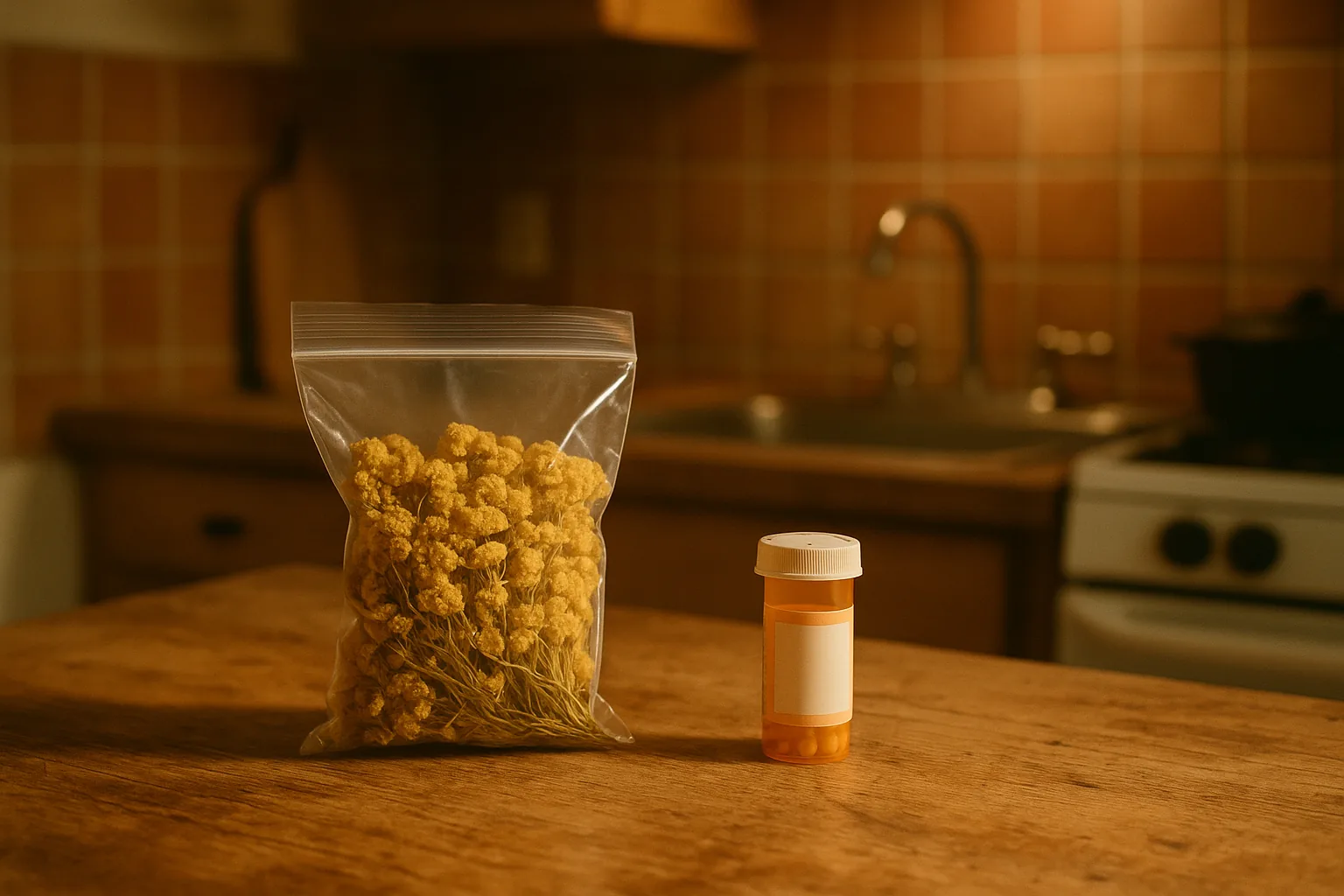
Hierba de San Juan. The first thing it makes me think of is my tía’s kitchen counter, where a bag of dried yellow flowers sat next to a prescription bottle of sertraline like they were roommates who’d never been introduced.
She’d been taking both for months. Her curandera recommended the herb for low mood. Her doctor prescribed the sertraline for the same reason. Neither knew about the other. And nobody in the family could answer the question my cousin finally asked at a Sunday dinner: “Can those two things mess each other up?”
The answer, it turns out, is yes. Badly. But the deeper question, the one that doesn’t fit on a pill bottle label, is why so many Latinas end up in this exact situation, quietly mixing herbal teas and prescription medications with no one coordinating the chemistry happening inside their bodies.
Why Latinas Don’t Tell Their Doctors About Curanderos
This isn’t a fringe behavior. According to research published in the *Journal of Immigrant and Minority Health*, roughly 69% of patients who visit curanderas do not disclose that use to their biomedical providers. The reasons aren’t mysterious: language barriers, fear of being dismissed, fear of a doctor’s visible disapproval. If you’ve ever watched your mother shrink in a clinical waiting room, you understand the dynamic without needing a citation.
But here’s what’s strange. Most curanderos aren’t anti-doctor. Research from multiple ethnographic studies confirms that the majority of traditional folk healers in Mexican American and broader Latino communities acknowledge the legitimacy of Western biomedicine. They’ll tell a patient with cancer to see an oncologist. They recognize the limits of limpias and sobadas when it comes to diagnosing a tumor or managing insulin resistance. The hostility that people assume exists between the curandero and the clinician is mostly a projection, a story we tell to make the gap feel intentional rather than structural.
The real problem is simpler and worse. It’s silence. It’s the patient sitting in the middle, holding two systems of care that don’t talk to each other, trying to figure out the pharmacology on her own.
The Specific Danger of Hierba de San Juan and SSRIs
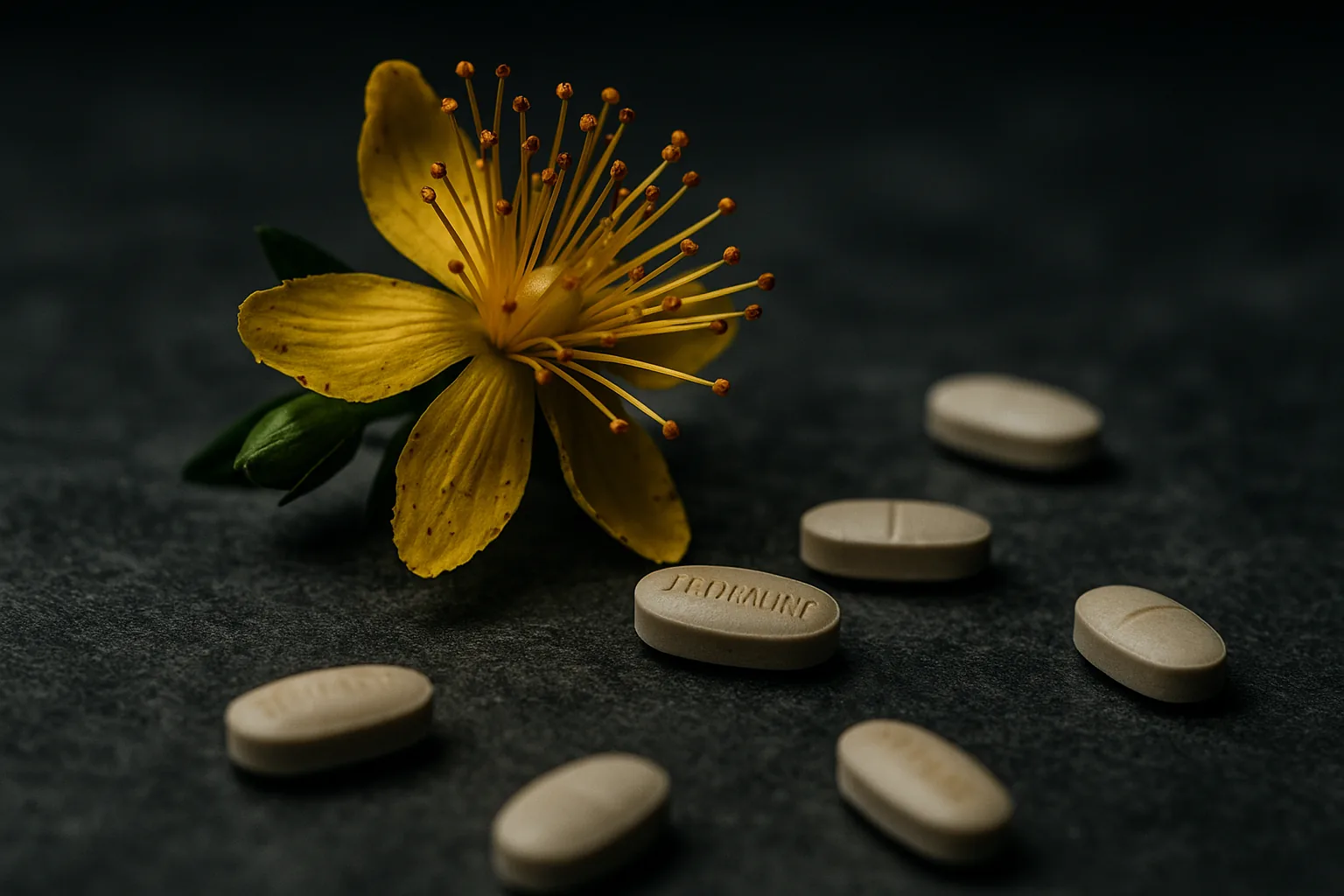
Let’s go back to my tía’s counter. Hierba de San Juan is the Spanish name for St. John’s Wort, or *Hypericum perforatum*. It’s one of the most widely used herbal remedies in Latin American folk medicine and across Europe. The active compounds, hypericin and hyperforin, inhibit the reuptake of serotonin, dopamine, and norepinephrine. That mechanism should sound familiar. It’s essentially what SSRIs and SNRIs do.
When you combine St. John’s Wort with a prescription antidepressant like sertraline (Zoloft), fluoxetine (Prozac), or paroxetine (Paxil), you risk serotonin syndrome. This is not a vague “interaction.” Serotonin syndrome is a potentially fatal condition involving hyperthermia, agitation, rapid heart rate, muscle rigidity, and in severe cases, seizures and organ failure. The mechanism is straightforward: too much serotonergic activity at the 5-HT receptors in the central nervous system. Two substances pushing serotonin levels in the same direction at the same time.
A 2012 systematic review in *Clinical Pharmacology & Therapeutics* found that St. John’s Wort also induces cytochrome P450 3A4 (CYP3A4) enzymes in the liver. This is the enzyme system that metabolizes a staggering number of drugs, including oral contraceptives, warfarin, cyclosporine, and certain HIV protease inhibitors. Inducing CYP3A4 means the liver breaks those drugs down faster. Their blood levels drop. They stop working as well. There are documented case reports of organ transplant rejection in patients who started St. John’s Wort while on cyclosporine, and breakthrough pregnancies in women on hormonal birth control.
So when my cousin asked if those two things on the counter could mess each other up, the answer wasn’t just yes. It was: the tea could make the antidepressant dangerous and the birth control useless at the same time.
What Are “Women’s Vitamins” Actually Doing in the Mix?
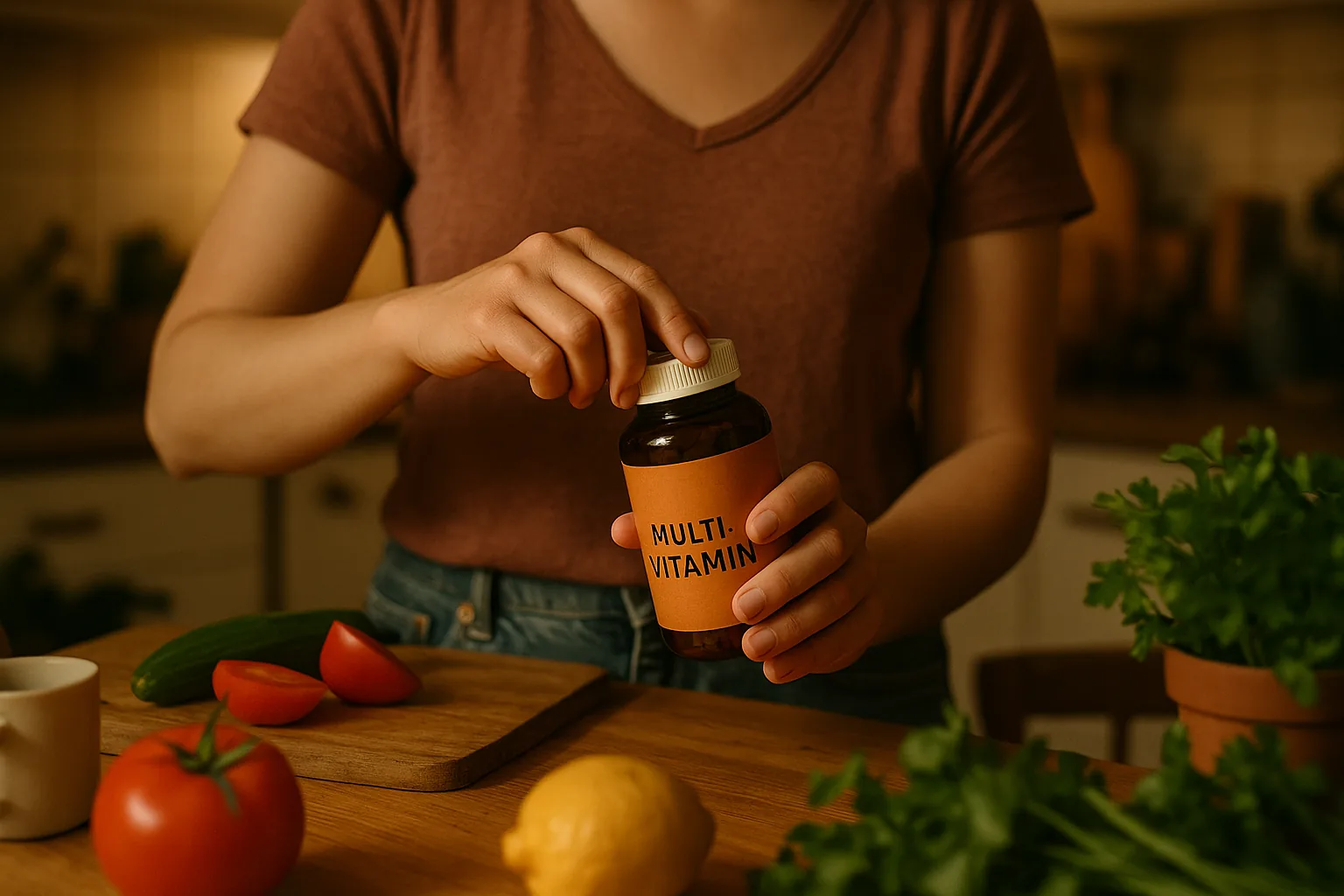
The phrase “women’s vitamins” gets thrown around like it describes one thing. It doesn’t. A standard women’s multivitamin typically contains iron (around 18 mg of ferrous fumarate or ferrous sulfate), calcium (200 to 500 mg), folic acid (400 to 800 mcg), vitamin D (600 to 1000 IU), B vitamins, and sometimes herbal additions like black cohosh, dong quai, or chasteberry (vitex agnus-castus). The herbal additions are where things get complicated.
Black cohosh, for instance, is frequently marketed for menopause symptom relief. The mechanism isn’t fully understood, but it appears to act on serotonin receptors (specifically 5-HT1A and 5-HT7) and may have estrogenic or anti-estrogenic effects depending on the tissue. If a woman is taking tamoxifen for estrogen-receptor-positive breast cancer, adding a supplement with estrogenic activity without her oncologist’s knowledge introduces a risk that no one is monitoring.
Chasteberry affects dopamine D2 receptors in the anterior pituitary, which suppresses prolactin secretion. It’s used traditionally for PMS and irregular cycles. But if that same woman is on metoclopramide (a dopamine antagonist used for nausea), the two substances are working against each other pharmacologically.
Then there’s the iron. Iron supplements reduce the absorption of levothyroxine (thyroid medication), certain antibiotics like tetracyclines and fluoroquinolones, and levodopa. The binding happens in the gut, not in the bloodstream. It’s a simple chelation issue, but it means timing matters. Taking your iron-containing women’s vitamin at the same time as your thyroid pill can reduce the thyroid medication’s bioavailability by 50% or more, according to data published in *Thyroid* journal. The fix is straightforward: separate them by four hours. But nobody tells you that if nobody knows you’re taking both.
The Kitchen Pharmacy Nobody Audits
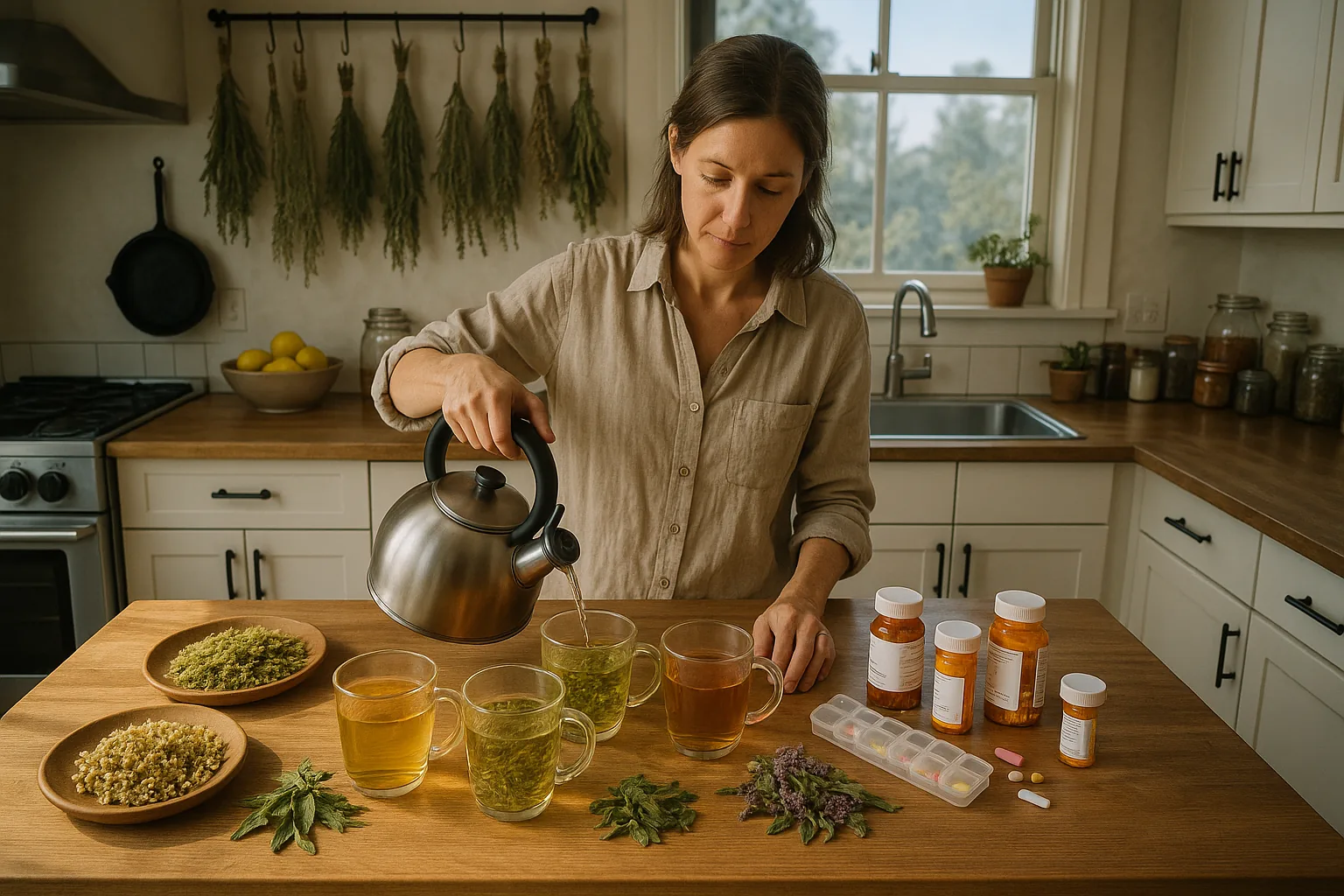
Here’s what a typical morning might look like for a woman in my family. She takes her prescription medication with breakfast. She drinks a té de canela because her mother always did and it’s supposed to help with blood sugar. She takes a women’s multivitamin because the commercial said she should. Maybe she adds a cup of manzanilla in the afternoon for her nerves, or yerba buena for digestion.
None of this seems reckless. Most of it isn’t. Manzanilla (chamomile) is generally mild, though it does contain coumarin compounds that can theoretically potentiate the effects of blood thinners like warfarin. Canela (cinnamon, specifically *Cinnamomum cassia*) contains coumarin too, and at high doses, the cassia variety has been associated with liver toxicity due to its coumarin content. A teaspoon in your oatmeal is not the same as drinking concentrated tea three times a day. Dose matters. Preparation matters. And nobody’s tracking any of it.
The curandera isn’t tracking it because she doesn’t know what prescriptions the patient is on. The doctor isn’t tracking it because he doesn’t know about the teas or the supplements. The patient isn’t tracking it because she doesn’t know there’s anything to track. She trusts both systems. The failure isn’t hers.
Why Clinicians Miss What Curanderos See (and Vice Versa)
There’s a temptation to frame this as traditional medicine versus modern medicine, to pick a side. That framing misses the point entirely.
Curanderos address conditions that don’t have ICD-10 codes. Susto, the folk illness triggered by a severe fright, maps loosely onto what Western psychiatry might call acute stress disorder or PTSD, but the frameworks aren’t interchangeable. The curandera treats susto with a limpia, a spiritual cleansing, and possibly with herbal teas like flor de manita or toronjil. The psychiatrist treats PTSD with trauma-focused CBT and possibly prazosin for nightmares. Neither is wrong. But if the patient is doing both, and both involve pharmacologically active substances (toronjil, or *Agastache mexicana*, has documented anxiolytic properties in animal models, likely through GABAergic mechanisms), someone needs to be aware of the full picture.
Research from the University of New Mexico’s Center for Development and Disability found that clinicians who lack familiarity with cultural viewpoints of wellness and illness consistently generate frustration and distrust in Latino patients. It’s not that these doctors are hostile. They just don’t have the vocabulary. They don’t know what empacho is. They don’t know what a sobada does. And when a patient tries to explain why she went to see a señora before coming to the clinic, the blank look on the doctor’s face is enough to ensure she never mentions it again.
Meanwhile, the curandera may not know that the tea she recommended contains compounds that act on the same receptor pathways as the prescription the patient picked up last week. She’s not a pharmacologist. She wasn’t trained to think in terms of CYP450 enzymes and drug-herb interactions. Her knowledge is experiential, generational, rooted in a different epistemology. That doesn’t make it invalid. It makes it incomplete in specific, dangerous ways when prescription drugs enter the equation.
A Case Study in What Goes Wrong
In 2003, the CDC documented cases of lead poisoning in Latino children whose parents had administered Azarcon or Greta, traditional Mexican folk remedies used for empacho (a digestive ailment). Azarcon is lead tetroxide. Greta is lead oxide. The children presented with lead encephalopathy, a condition involving brain swelling, seizures, and potential permanent cognitive damage. Blood lead levels in some cases exceeded 70 mcg/dL, far above the CDC’s reference value of 3.5 mcg/dL.
This wasn’t a case of bad intentions. The parents were treating a recognized folk illness with a recognized folk remedy. They didn’t know the powder was lead. Many of them had used it themselves as children without obvious acute effects (lead’s damage is often cumulative and insidious). The failure was informational. Nobody in the chain, not the person who sold the remedy, not the family members who recommended it, not the parents who administered it, had access to the toxicological data.
This is an extreme example, and it’s worth saying clearly: the vast majority of herbal remedies used in curanderismo are not lead compounds. Manzanilla is not poison. Ruda is not arsenic. But the Azarcon case illustrates what happens when two systems of care operate in total isolation. The risk isn’t that traditional medicine is inherently dangerous. The risk is that silence is.
What an Integrated Approach Actually Looks Like
A few clinics have started experimenting with something closer to a solution. The University of New Mexico Hospital, for instance, has explored integrating traditional healers into clinical settings. The idea isn’t to have the curandera write prescriptions or the doctor perform limpias. It’s to create a space where the patient doesn’t have to choose which provider to lie to.
In practice, this means the intake form asks about herbal remedies and traditional healer visits without judgment. It means a pharmacist reviews the full list, including the teas, the supplements, and the remedios from the yerbería. It means the curandera can call the clinic and say, “I’m recommending hierba del cancer for this patient. Is she on anything that might interact?” It means treating the patient as a whole person who lives in two medical worlds, not because she’s confused, but because both worlds offer her something real.
This is harder than it sounds. Insurance doesn’t reimburse for curandero consultations. Medical schools don’t teach curanderismo pharmacology. And the structural barriers of language, documentation status, and clinic accessibility mean that many of the patients who need this integration the most are the least likely to receive it.
A Concrete Protocol for Right Now
Until those integrated clinics become the norm rather than the experiment, here’s what the evidence supports as a practical approach for anyone navigating both systems.
First, make a complete list. Every tea you drink regularly. Every supplement, including the women’s vitamin. Every remedio your curandera recommended. Every prescription. Write it down. Bring it to both providers.
Second, check specific interactions. The National Institutes of Health’s Office of Dietary Supplements maintains a database. The Memorial Sloan Kettering Cancer Center’s “About Herbs” database is even more detailed for herb-drug interactions. Look up each herbal ingredient by its Latin botanical name for the most accurate results.
Third, separate your iron. If your women’s multivitamin contains iron and you take thyroid medication, blood pressure medication, or antibiotics, take them at least four hours apart. This single timing adjustment can restore the effectiveness of drugs that iron chelates in the gut.
Fourth, tell your doctor about St. John’s Wort specifically. If you take any form of hierba de San Juan and you’re also on antidepressants, birth control, blood thinners, or immunosuppressants, this interaction is well-documented enough that most physicians will recognize it immediately. You don’t have to explain curanderismo. You just have to name the herb.
Fifth, ask your curandera about the prescription. Most curanderos, when they understand what medication a patient is on, will adjust their recommendations. They’re not trying to compete with the doctor. They’re trying to help. Give them the information they need to do that safely.
The Question Nobody Could Answer, Answered
My cousin’s question at that Sunday dinner was never really about pharmacology. It was about trust. Could she trust the curandera? Could she trust the doctor? Could she trust that the two worlds her tía lived in weren’t going to collide inside her body?
The pharmacology has an answer: yes, hierba de San Juan and sertraline can interact dangerously through serotonin accumulation and CYP3A4 induction. That’s clear. What’s less clear, and what no single study can resolve, is how to build a healthcare system that respects the curandera’s knowledge without ignoring the pharmacist’s data. How to make a patient feel safe enough to bring her whole life into the exam room.
I don’t have a clean conclusion for that. The research on culturally competent care is growing but still thin. The integrated clinic model works in pilot programs but hasn’t scaled. The 69% nondisclosure rate persists because the conditions that created it persist.
What I do know is that the danger was never the manzanilla or the women’s vitamin or the curandera’s intentions. The danger was the gap. The space between two kitchen counters where a bag of dried flowers sat next to a prescription bottle, and nobody thought to introduce them.