What 5 Latino Herbal Teas Actually Do at Cup-Level Doses
You’ve had the tea. You didn’t choose it. Someone made it for you when you were small enough that nobody asked what you wanted. You had a stomachache or you couldn’t sleep or you were too wound up after a long day of being a kid, and a cup appeared — one of those Latino herbal teas that every household keeps somewhere in the kitchen. Manzanilla. Maybe toronjil. Maybe something with ginger grated into warm water with a little sugar. You drank it because it was there and because the person handing it to you wasn’t offering a suggestion. They were offering a fact. This helps. Drink it.
And you did. You probably still do.
The interesting thing isn’t that these teas have persisted for generations. It’s that they persisted without anyone in your family needing a clinical trial to keep using them. The cup kept showing up because the person who made it remembered it working, and their mother remembered the same. That’s not a small thing. It’s also not the whole picture.
Right now, these same five botanicals are being repackaged in pastel pouches, sold at a premium, and marketed back to you as “functional wellness.” Chamomile for your sleep stack. Ginger shots for gut health. Lemon balm tinctures for stress. The plants haven’t changed. The framing has. And buried somewhere between your grandmother’s kitchen and the supplement aisle is a question worth actually sitting with: what does the science say these plants do, and where does it fall short of what tradition promised?
Manzanilla does something. The question is how much.
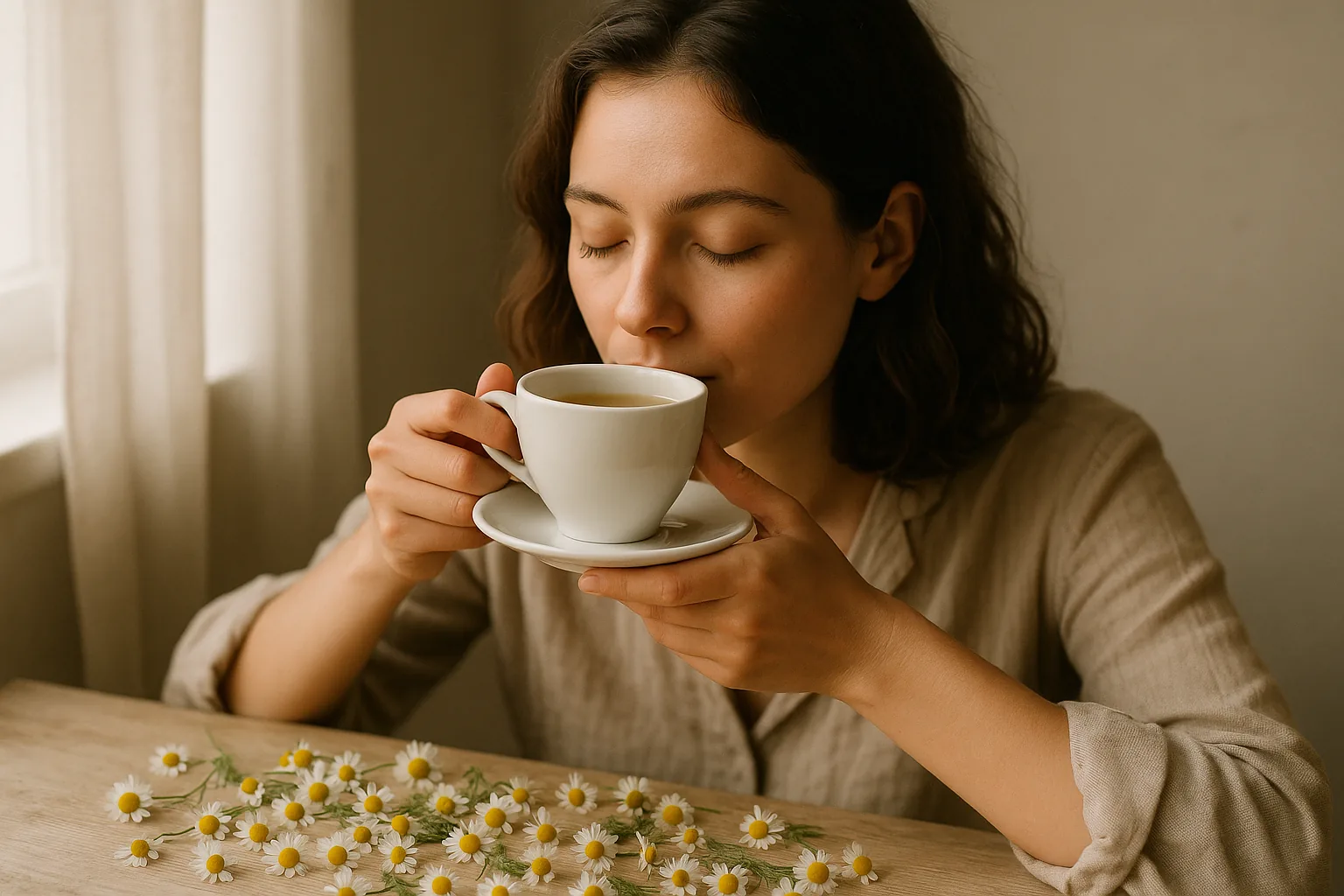
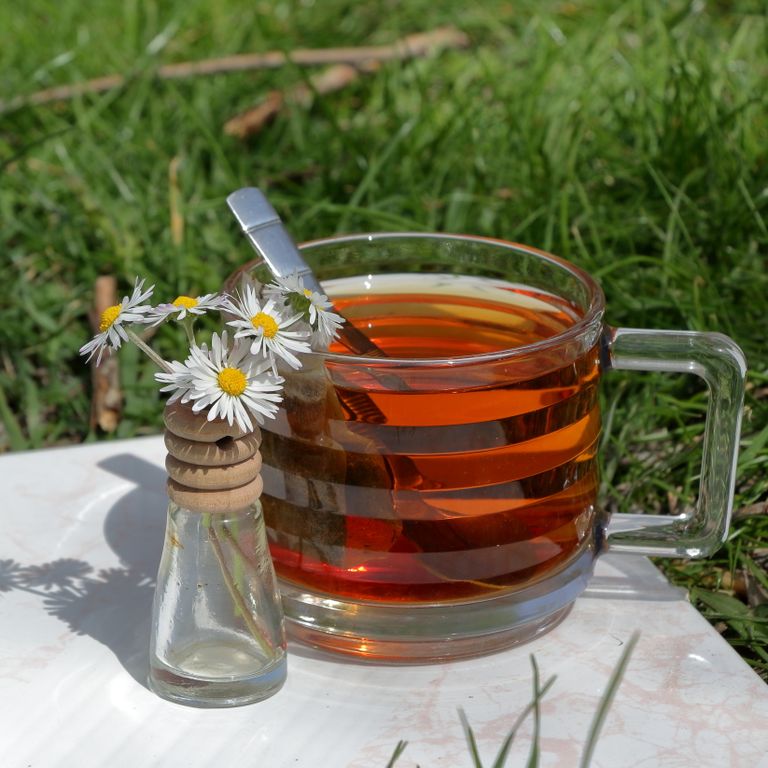
Chamomile, or manzanilla, is probably the most culturally embedded herbal tea in Latin American households. It shows up for everything. Gas in a baby. Cramps. Nerves before a test. A bad night. It’s the default remedy for a category of problems that could be loosely described as “your body is upset and you need to calm down.” In many homes, the cup comes with a hand on your forehead and instructions to lie down — the tea and the gesture arrive together, indistinguishable.
The science partially agrees. Apigenin, a flavonoid found in chamomile, binds to benzodiazepine receptors in the brain. These are the same receptors targeted by drugs like diazepam. The binding is much weaker, but it’s real and measurable. A [2019 randomized controlled trial published in *Phytomedicine*](https://doi.org/10.1016/j.phymed.2019.152909) found that chamomile extract at 1,500 mg per day modestly improved sleep quality in older adults over four weeks compared to placebo. Other studies have shown small reductions in generalized anxiety disorder symptoms at similar extract doses.
Here’s the gap. Most of that evidence comes from concentrated extracts, not from a single cup of tea steeped for five minutes. A standard cup of chamomile tea contains roughly 10 to 15 mg of apigenin, depending on brewing time and flower quality. The doses used in clinical trials are often the equivalent of drinking several cups at once, sometimes more. That doesn’t mean the cup does nothing. It means the cup probably does less than the extract capsule, and the extract capsule already produces modest effects.
So when your grandmother said manzanilla would help you sleep, she wasn’t wrong. She also wasn’t describing what a sleep specialist would call a treatment for chronic insomnia. What chamomile appears to offer, at cup-level doses, is a mild calming effect that might ease sleep onset in someone who’s mildly restless. That’s a real thing. It’s just not a cure.
Toronjil has quietly strong evidence for anxiety
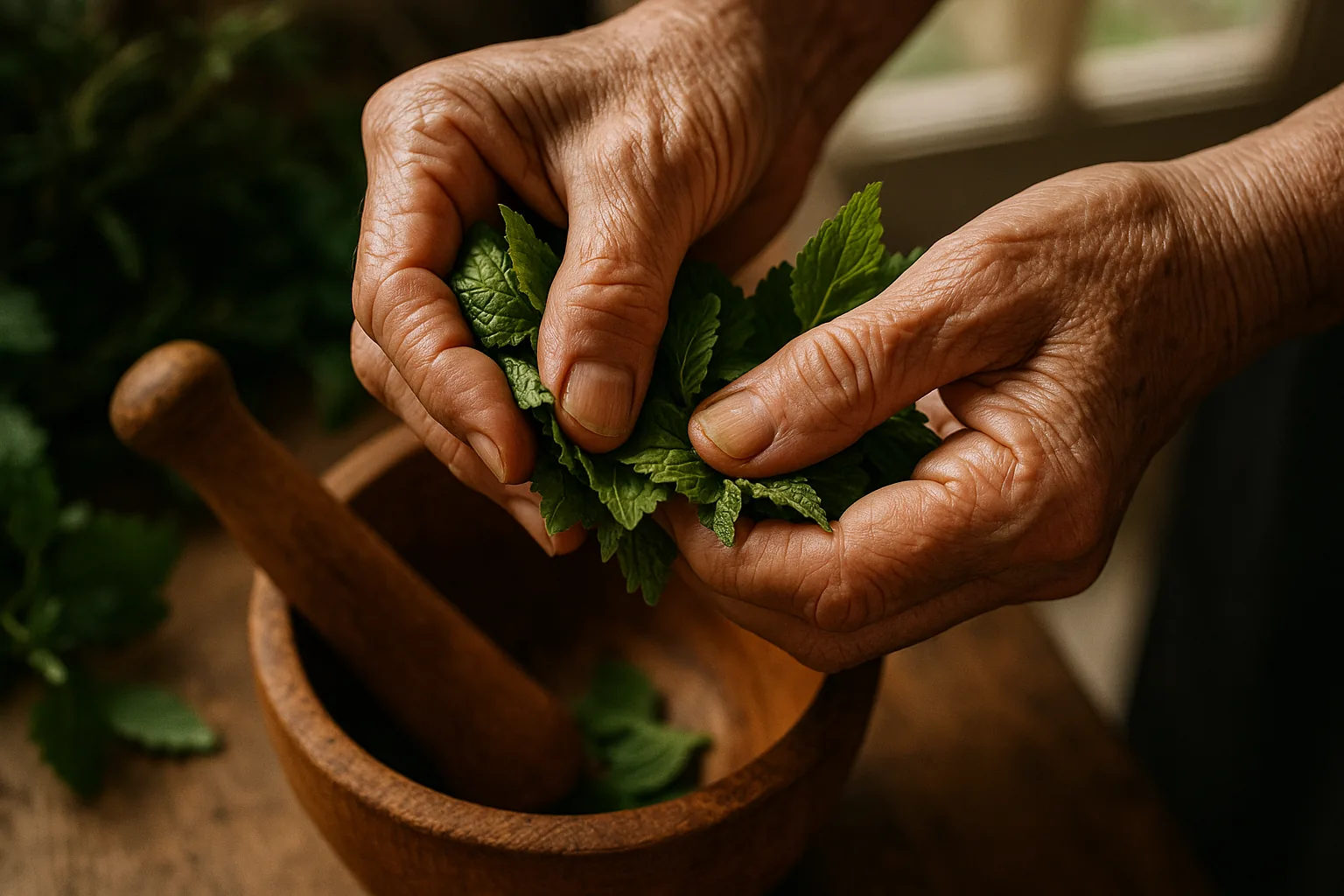
Lemon balm goes by several names depending on where your family is from. Toronjil in Mexico and parts of Central America. Melisa in some South American countries. Erva-cidreira in Brazil. The traditional use is remarkably consistent across those geographies: it’s for nerves, for a racing mind, for the kind of agitation that sits in your chest and won’t let you breathe all the way. In Brazilian households, erva-cidreira is often the first thing prepared when someone arrives home visibly upset — the kettle goes on before the conversation starts.
Of the five botanicals on this list, lemon balm may have the most coherent modern evidence for exactly that use. Rosmarinic acid, one of its primary active compounds, inhibits the enzyme GABA transaminase, which breaks down gamma-aminobutyric acid in the brain. GABA is the main inhibitory neurotransmitter. More of it available at the synapse generally means less neural excitability. Less excitability tends to mean less anxiety and easier sleep onset. This mechanism has been demonstrated in preclinical models and is consistent with findings from several small human trials, though the pathway still needs confirmation in larger studies.
A [2021 systematic review in *Nutrients*](https://doi.org/10.3390/nu13082940) described the evidence for lemon balm’s anxiolytic and sleep-promoting effects as “reasonable,” which in the cautious language of clinical research is actually a meaningful endorsement. Several small randomized trials have shown reductions in anxiety scores and improvements in sleep quality at doses ranging from 300 to 600 mg of standardized extract. One study found that 600 mg of lemon balm extract improved both calmness and alertness in healthy volunteers under mild stress conditions, which is unusual because most sedating agents sacrifice one for the other.
The limitations are real but predictable: small sample sizes, short study durations, and variability in extract standardization. Nobody has run a large, multi-site, long-term trial on lemon balm because nobody can patent a plant. That doesn’t invalidate what’s there. It does mean you should treat the findings as encouraging rather than conclusive.
For the person drinking a cup of toronjil tea before bed, the question is similar to chamomile: how much rosmarinic acid is actually making it into that cup? Estimates vary, but a well-steeped cup of high-quality dried lemon balm delivers roughly 50 to 100 mg of rosmarinic acid. That’s below the extract doses used in most trials, but not negligibly so. If you’re looking for mild relief from everyday tension or restlessness, the cup is a reasonable starting point. If you’re dealing with a diagnosed anxiety disorder, the cup is not treatment.
Ginger is the one where science and tradition actually align

If there’s a botanical on this list where the folk use and the clinical evidence overlap almost perfectly, it’s ginger. Jengibre in Spanish. Used across Latin America primarily for stomach problems: nausea, bloating, indigestion, that heavy feeling after a meal that makes you unbutton your pants and regret the second plate.
The mechanism is well characterized. Gingerols and shogaols, the primary bioactive compounds in fresh and dried ginger respectively, accelerate gastric emptying by stimulating antroduodenal contractions. They also have direct anti-emetic effects, acting on serotonin 5-HT3 receptors in the gut, which are the same receptors targeted by ondansetron, a pharmaceutical anti-nausea drug used in chemotherapy settings.
The evidence base is broader and more consistent than any other botanical here. A [2020 meta-analysis in *Food Science & Nutrition*](https://doi.org/10.1002/fsn3.1903) pooling data from 12 randomized controlled trials found that ginger significantly reduced nausea across multiple contexts: pregnancy-related nausea, postoperative nausea, and chemotherapy-induced nausea. Effective doses ranged from 250 mg to 1,000 mg of dried ginger powder, with most studies using around 1 gram per day split into multiple doses.
A cup of ginger tea made from about a one-inch piece of fresh root, roughly 5 to 10 grams of raw ginger, delivers a meaningful dose of gingerols. This is one case where the traditional preparation method actually gets you into the clinical ballpark. Your tía grating ginger into hot water with a little piloncillo after a heavy meal was, without knowing the pharmacokinetics, doing something that evidence supports.
Where ginger doesn’t belong is in the sleep or anxiety conversation. It’s not sedating. It’s not particularly calming. It’s a digestive aid with genuine clinical backing, and trying to market it as something else is a distortion of both the tradition and the science. When you see ginger listed as an ingredient in a “calm and sleep” blend, that’s marketing, not mechanism.
Passionflower carries more tradition than evidence
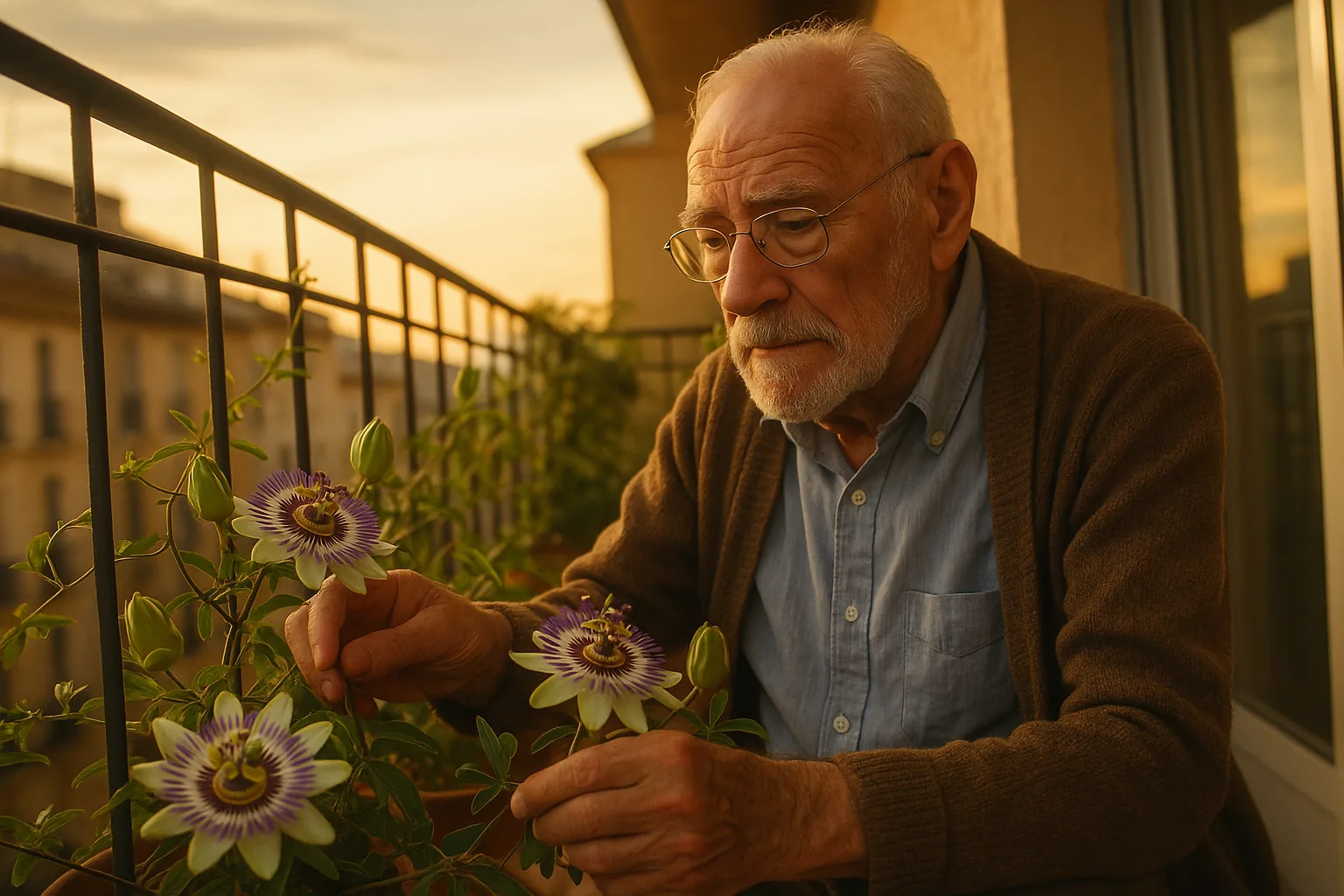
Passiflora, known in various Latin American contexts as maracuyá leaf tea or simply flor de pasión, holds a special place in Brazilian and broader South American herbal practice. The tea made from the leaves and sometimes the flowers has long been used for insomnia, nervousness, and general restlessness. In parts of Brazil, it’s as standard a nighttime remedy as manzanilla is in Mexico.
The proposed mechanism involves several flavonoids, including chrysin and vitexin, which appear to modulate GABA-A receptor activity. Some in vitro and animal studies have shown anxiolytic and sedative effects at various concentrations. The problem is that human evidence hasn’t kept pace with the preclinical promise.
A [2020 review in *Phytotherapy Research*](https://doi.org/10.1002/ptr.6683) evaluated the available randomized controlled trials for passionflower’s effects on anxiety and insomnia. The authors found some studies suggesting benefit, including one often-cited trial where passionflower tea improved subjective sleep quality over seven days compared to placebo. But the overall conclusion was cautious: the evidence was suggestive but not consistent enough for a strong clinical recommendation. Studies were small, often fewer than 40 participants. Methodological quality was mixed. And the active compound profile of passionflower is complex enough that different preparations might deliver different effects.
This is one where being honest matters more than being encouraging. Passionflower might help with mild sleep difficulty. The tradition says it does. Some studies hint that it does. But “hints” is the operative word. If you’re choosing between passionflower tea and lemon balm tea for a restless night, the evidence currently favors lemon balm. If passionflower is what your family used and what feels right, that’s a legitimate reason to keep using it. Just know that the scientific case is thinner than the marketing often implies.
One practical note: the dosing in most passionflower studies uses standardized extracts, not tea. The amount of chrysin or vitexin in a cup of leaf tea is highly variable and generally low. This is a botanical where the gap between “traditional cup” and “studied extract” is especially wide.
Latino Herbal Teas and Boldo: The One That Needs the Most Caution
Every family has a boldo story. It’s the after-dinner tea. The morning-after tea. The “my stomach feels heavy and I think my liver needs help” tea. Boldo leaf tea is deeply embedded in South American digestive tradition, particularly in Chile, Argentina, and Brazil, where it’s associated with liver support and post-meal comfort. The folk reasoning is intuitive: you ate something that didn’t agree with you, or you drank too much, and boldo will help your liver process it.
The main active compound in boldo is boldine, an aporphine alkaloid with demonstrated antioxidant and mild hepatoprotective effects in animal models. Boldine has been shown to reduce lipid peroxidation in rat liver tissue and to have some anti-inflammatory activity. There’s also some evidence that boldo stimulates bile secretion, which would support its traditional use as a digestive aid.
But here’s where boldo diverges from the rest of this list. The human clinical evidence is thin. There are very few controlled trials evaluating boldo leaf tea or extract in people, and those that exist tend to be small, short, and not well standardized. The leap from “boldine protects rat liver cells in a petri dish” to “boldo tea helps your liver after a night out” is a very large leap, and no human clinical trials currently support the hangover-liver use at tea doses. The folk claim may have a kernel of biological plausibility, but plausibility is not proof.
More concerning is the safety profile. Boldo contains ascaridole, a terpene peroxide that in high concentrations is hepatotoxic. The irony is real: the tea people drink to protect their liver contains a compound that, at sufficient doses, can damage it. At the concentrations found in a typical cup of boldo tea, the risk is likely very low. But “likely very low” is different from “well studied and established as safe,” and long-term daily consumption hasn’t been adequately evaluated.
This doesn’t mean you should never drink boldo tea. It means boldo is probably best used the way most families already use it: occasionally, for digestive discomfort, not as a daily supplement. And if you’re someone with existing liver conditions, it’s worth asking your doctor about it rather than assuming the tradition accounts for your specific situation.
The honest gap between what tradition claims and what trials show
Here’s what the comparison actually looks like when you lay it out without sentimentality.
Ginger has the strongest and broadest evidence. It works for nausea and digestion at doses you can realistically achieve by drinking tea or eating the root. The tradition and the trials agree. Lemon balm has reasonable evidence for mild anxiety and sleep support, with a clear mechanism involving GABA metabolism, though the trial quality needs to improve. Chamomile has modest evidence for sleep quality and mild calming effects, driven primarily by apigenin, but the gap between cup-level doses and study doses is significant. Passionflower has suggestive but inconsistent evidence, with preclinical promise that human studies haven’t fully confirmed. Boldo has the thinnest evidence and the most safety considerations, making it the one most likely to be overpromised in a commercial context.
None of these are drugs. None of them should be treated as substitutes for professional care when symptoms are persistent, worsening, or interfering with daily life. That’s not a disclaimer. It’s the honest read of the data.
What to actually do with a cup of tea
If you’re already drinking one of these teas, you don’t need permission to keep doing it. You also don’t need to pretend the cup is doing more than it is.
For sleep onset and mild anxiety, lemon balm tea is the most evidence-supported option in this group at cup-level doses. Use a heaping tablespoon of dried leaf, steep it covered for at least 10 minutes to retain volatile compounds, and drink it 30 to 45 minutes before bed. If you want a stronger effect, a standardized lemon balm extract at 300 to 600 mg has more clinical support than the tea alone.
For digestion, ginger is straightforward. Grate fresh ginger into hot water, or use about a quarter teaspoon of dried ginger powder. This is one botanical where the traditional preparation delivers doses that align with what studies have tested.
For the rest, keep perspective. Chamomile tea before bed is a reasonable, low-risk habit that may offer mild benefit. Passionflower tea may help, but the evidence won’t carry much weight in a conversation with your doctor. Boldo should stay occasional and probably shouldn’t be your daily digestive ritual, especially if you’re taking medications metabolized by the liver.
If you’re shopping for any of these as supplements, look for products that list the standardized extract amount and the concentration of the primary active compound (apigenin for chamomile, rosmarinic acid for lemon balm, gingerols for ginger). If the label only says “proprietary blend” without specifying doses, skip it. You’re paying for opacity.
The cup was never just the compounds
There’s something the science can’t capture and shouldn’t try to. The act of being handed a warm cup by someone who noticed you weren’t okay. The ritual of slowing down long enough to drink something hot. The ambient message that your discomfort was seen and addressed, even if the intervention was a few dried flowers in water.
That’s not placebo. Or rather, it’s not only placebo. Context and care affect physiological outcomes. A [2014 study in *Pain*](https://doi.org/10.1016/j.pain.2014.03.009) found that the warmth of a beverage alone can modulate the perception of interpersonal warmth and reduce stress-related cortisol. The ritual surrounding the tea is part of what the tea does.
Your grandmother probably knew that without needing the citation. She also probably didn’t distinguish between “this plant has active compounds that cross the blood-brain barrier” and “this is what we do when someone in this family can’t sleep.” She didn’t need to. You might, though. Because the supplement aisle is full of people who want to sell the tradition back to you at twelve dollars an ounce, and the only protection against overpaying for underdosed nostalgia is knowing what the plants actually do, at what dose, and for whom.
Drink the tea. Understand the tea. They’re not the same thing, but they’re not opposites either.