
What GLP-1 Taste Changes Actually Do to Your Plate
You already know the moment. Someone passes you a plate at a family gathering, the same thing you’ve eaten a hundred times, and it lands wrong. Not spoiled. Not different. Just less. Less sweet, less satisfying, less yours. You eat a few bites, put the plate down, and wonder why nobody else at the table seems to notice that the food changed. Except the food didn’t change. You did. You started a GLP-1 medication, and the GLP-1 taste changes that followed — somewhere between the second and fourth injection — shifted the whole experience of eating underneath you like someone adjusted the color temperature on a screen you didn’t know had settings.
This is happening to millions of people. And in English-dominant Latino communities, where food is structure, language, and ritual all at once, it raises a question that nobody’s prescribing doctor seems ready for: what do you do when the drug that’s working on your body starts working on your identity, too?
How GLP-1 drugs change taste and food reward
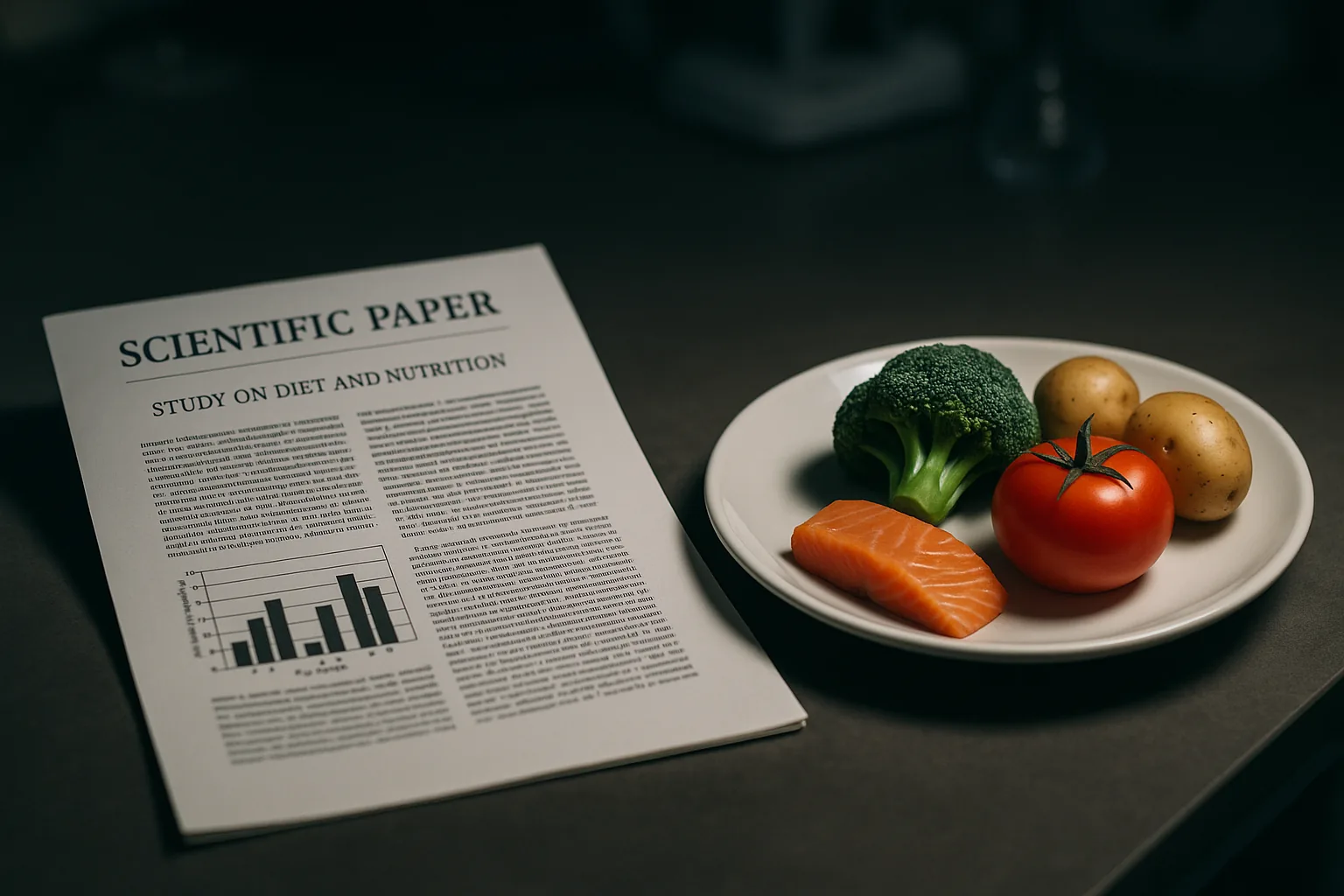
Let’s start with what’s actually happening in the body, because the popular shorthand, “these drugs kill your appetite,” misses something important. GLP-1 receptor agonists like semaglutide and tirzepatide don’t just make you less hungry. They appear to change how food feels.
A [2024 review published in the journal *Appetite*](https://doi.org/10.1016/j.appet.2024.107183) argues that the taste changes patients report on GLP-1s aren’t best understood as simple taste damage. Instead, the authors propose a sensory-liking-wanting framework. There are three distinct layers to how we experience food. Sensory perception is whether you can detect sweetness or salt. Liking is the hedonic pleasure a food gives you. Wanting is the motivational pull, the craving, the drive to seek it out. GLP-1 drugs seem to act most powerfully on wanting and liking, while the effects on raw sensory detection are less consistent and less clear.
A [real-world study published in *Diabetes, Obesity and Metabolism*](https://doi.org/10.1111/dom.15330) found that patients on GLP-1 or dual GIP/GLP-1 therapy who reported increases in sweet taste perception also experienced greater satiety, lower appetite, and lower craving intensity. That’s a counterintuitive finding. It suggests that for some people, the drugs might actually sharpen certain taste signals while simultaneously dulling the reward response. You taste the sweetness more clearly. You just don’t want it the way you used to.
A [separate review in *Obesity Reviews*](https://doi.org/10.1111/obr.13569) documented reductions in desire for sweet, salty, savory, and fatty foods among semaglutide users, with specific decreases in craving for dairy and starchy foods. These aren’t subtle changes. When someone who grew up eating fresh tortillas at every meal suddenly finds them uninteresting, that’s not a minor side effect. It’s a reorganization of daily life.
When familiar foods stop feeling familiar

Consumer research and patient forums tell a story the clinical papers haven’t fully captured yet. Users commonly describe foods as “off,” less enjoyable, or unexpectedly mismatched in texture or flavor, especially in the early weeks of treatment. A tamale that used to be the highlight of a weekend is suddenly too heavy, too dense, too much. Arroz con leche tastes cloyingly sweet. The café de olla your tía makes doesn’t hit the same way.
Here’s where it gets complicated for Latino families. In many households, food is the connective tissue of relationships. Refusing a second serving isn’t just a dietary choice. It’s a social signal. Eating less can be read as rejection, as illness, as someone thinking they’re too good for the table. And when the reason is a medication you may or may not have told your family about, the silence around it creates its own kind of tension.
There’s no published clinical trial studying GLP-1 taste changes specifically in Latino populations. That gap matters, and it should be named honestly. What we do know comes from inferring the documented appetite and preference shifts onto a cultural context where food norms, portion expectations, and the social meaning of eating are deeply specific. The biology is the same across populations. The lived experience of that biology is not.
The science of reduced food reward on GLP-1s
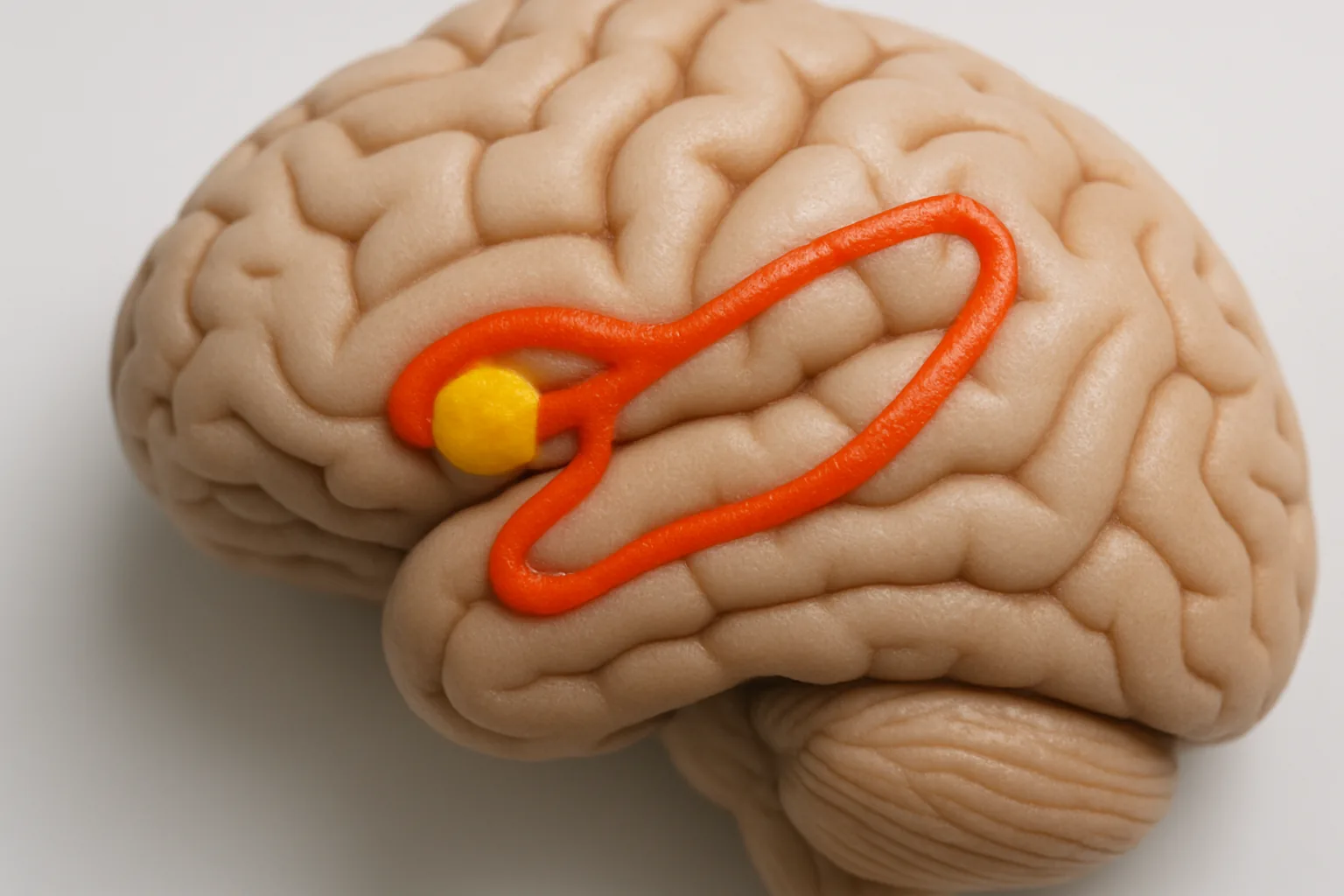
To understand why these drugs alter the pleasure of eating, you need to look at what GLP-1 receptors actually do in the brain. GLP-1 receptors aren’t only in the gut. They’re expressed in the hypothalamus, the brainstem, and critically, in the mesolimbic dopamine pathway — the same circuitry involved in reward, motivation, and addiction. When a GLP-1 agonist binds to receptors in the nucleus accumbens or the ventral tegmental area, it modulates dopamine signaling. The result isn’t that food becomes tasteless. It’s that food becomes less compelling. The difference matters.
Think of it this way. You can still hear music on a car stereo turned down to volume two. You recognize the song. You can identify the instruments. But it doesn’t move through your body the way it does at volume eight. GLP-1 drugs seem to turn down the reward volume on food without necessarily muting the sensory channel entirely.
This helps explain why so many patients describe the experience in emotional rather than purely physical terms. “It doesn’t taste bad. I just don’t care about it.” “I used to think about my mom’s pozole all day. Now I forget to eat.” These aren’t descriptions of taste dysfunction. They’re descriptions of altered motivation. And that distinction has real implications for what kinds of interventions might help.
Portion norms and the unspoken rules of the table
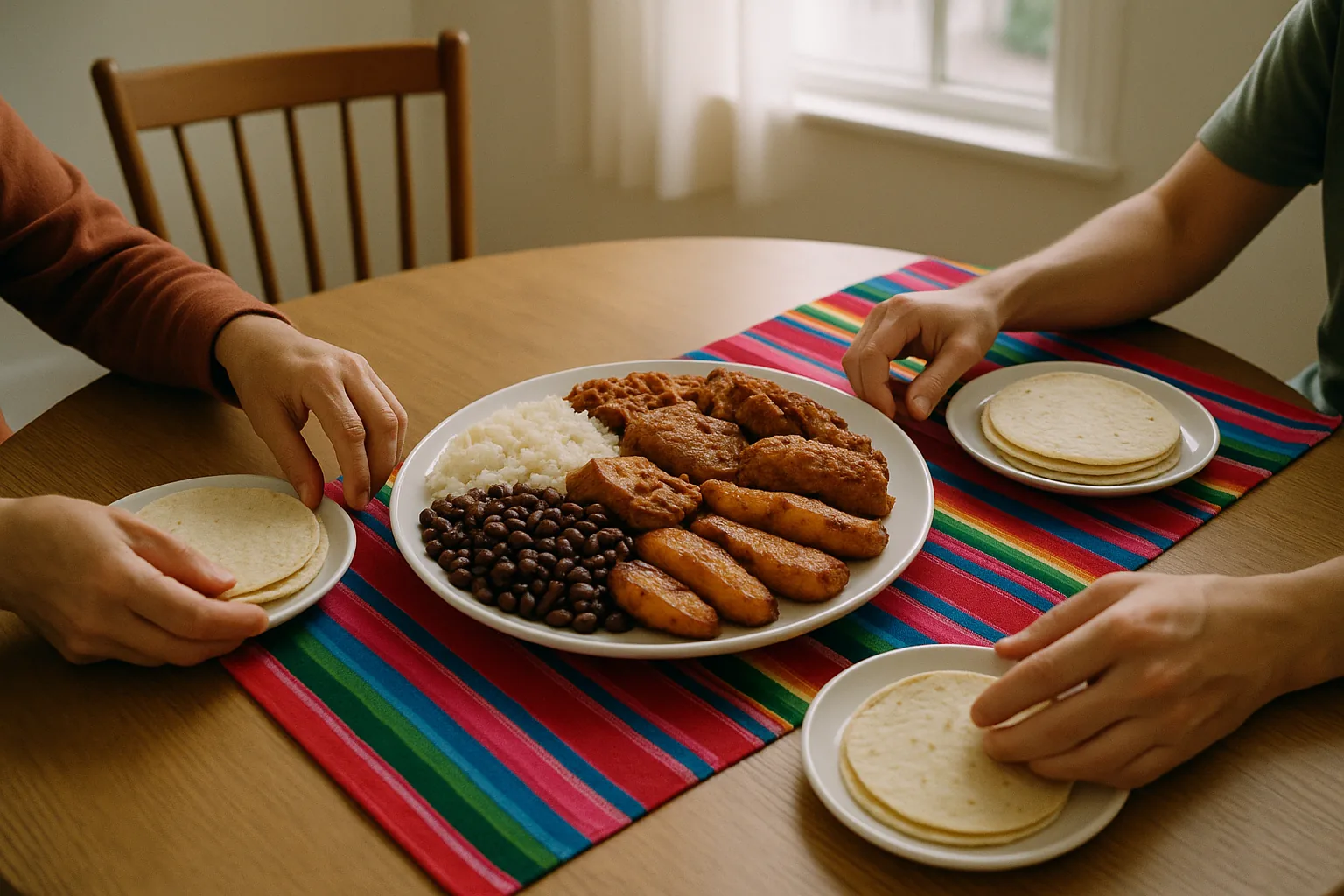
In English-dominant Latino households, there’s often a particular negotiation happening around food that outsiders miss. The cultural norms may come from parents or grandparents who grew up with food scarcity, where a full plate was proof of prosperity and love. But the dominant English-language wellness culture these same families navigate daily promotes restriction, calorie counting, and thinness as health.
GLP-1 drugs land right in the middle of that tension. They reduce intake without requiring willpower, which for some people feels like a relief and for others feels like a betrayal of something they can’t quite name. When the medication makes you eat less at a family dinner, you might receive praise from one part of your world and concern from another, all in the same evening.
The shift in portion norms isn’t just personal. It’s relational. If you’re the person who always cooked for six and now only eats enough for one, the math of caregiving changes. If your Saturday mornings used to revolve around a big desayuno and now you skip it because nothing sounds good, a rhythm breaks. These are real losses, even when the metabolic outcomes are positive. And acknowledging them as losses doesn’t mean the medication is wrong. It means the experience is more layered than a before-and-after photo suggests.
Which supplements actually help on GLP-1 therapy
Now for the part the supplement industry doesn’t want you to examine too closely. Walk through any pharmacy or scroll through any wellness influencer’s page and you’ll find dozens of products marketed as “GLP-1 support.” They promise to restore taste, control cravings, boost metabolism, or fill nutritional gaps caused by eating less. Some of these claims have a kernel of truth. Most don’t.
Let’s separate what’s supported from what’s noise.
Protein supplementation is the most defensible recommendation for people on GLP-1s, but not because it fixes taste. When your appetite drops significantly, total caloric intake drops with it, and protein intake often falls disproportionately because protein-rich foods tend to be more satiating and harder to eat when you’re already not hungry. The clinical literature on GLP-1 therapy consistently shows lower overall intake, and dietetic support focused on protein adequacy — roughly 1.2 to 1.6 grams per kilogram of body weight per day for most adults — can help protect lean muscle mass during rapid weight loss. A simple whey or plant-based protein powder mixed into a small smoothie can make a meaningful difference when a full meal feels impossible. This isn’t glamorous. It works.
Electrolyte supplementation has a narrower but legitimate role. GLP-1 side effects commonly include nausea, dry mouth, and gastrointestinal disruption, all of which can make food less appealing and contribute to dehydration. Adequate sodium, potassium, and magnesium intake through an electrolyte drink or even just salted broth can reduce nausea severity and improve the experience of eating. This won’t restore the craving for your abuela’s flan, but it might make sitting down to eat feel less like a chore. The rationale here comes from documented side effect profiles affecting the food experience, not from any claim about taste restoration.
What the supplement aisle gets wrong about cravings
Here’s where things get less charitable. The majority of supplements marketed specifically for GLP-1 users — products labeled for “taste restoration,” “craving reset,” “metabolic optimization,” or “hormonal rebalancing” — do not have strong clinical evidence supporting those claims. Not in the GLP-1 research literature. Not in independent trials. Not anywhere the evidence has been rigorously examined.
This includes proprietary blends of B vitamins, zinc, and herbal extracts advertised to “bring back your taste buds.” Zinc deficiency can cause hypogeusia, a real reduction in taste acuity, and supplementation at 15 to 30 milligrams per day can help in cases of documented deficiency. But the taste changes on GLP-1s aren’t caused by zinc deficiency. They’re caused by altered reward signaling in the brain. Throwing zinc at a dopamine modulation issue is like putting premium gas in a car whose steering column is the problem. It’s not harmful, but it’s not addressing the mechanism.
The same logic applies to “detox” supplements, adaptogenic blends, and products claiming to “reset” cravings through gut microbiome manipulation. The gut microbiome is genuinely interesting in the context of GLP-1 biology — there’s emerging research on how these drugs alter microbial composition — but no commercially available probiotic has been shown to reliably counteract GLP-1-related changes in food reward or taste perception. The science isn’t there yet, and any product claiming otherwise is outrunning its evidence.
Berberine-containing supplements marketed as natural adjuncts to GLP-1 therapy deserve special skepticism. We’ve covered berberine separately in this publication, and the short version is that while it has modest effects on blood glucose through AMPK activation, it is not a GLP-1 mimetic, doesn’t act on the same reward pathways, and adding it to semaglutide therapy hasn’t been studied for taste or craving outcomes. The marketing copies the language of the drug without copying the mechanism.
What a practical protocol looks like
If you’re on a GLP-1 medication and the experience of eating has changed in ways that bother you, here’s a framework based on what the evidence actually supports.
First, track what changed and when. Use a simple food diary for two weeks, noting not just what you ate but how it tasted, whether you wanted it before eating, and whether you enjoyed it during. This creates a baseline that’s more useful than vague feelings of “everything’s different.” It also helps your doctor or dietitian identify whether you’re experiencing sensory changes, hedonic changes, motivational changes, or some combination.
Second, prioritize protein at every eating occasion. Aim for 25 to 40 grams per meal if you’re eating two to three meals a day, or supplement with a shake if meals are smaller. Leucine content matters for muscle protein synthesis, so look for sources providing at least 2.5 grams of leucine per serving. Whey isolate hits this easily. Plant blends typically need a larger serving to match.
Third, stay hydrated with electrolytes, not just water. A basic oral rehydration approach — roughly 1,000 milligrams of sodium, 200 milligrams of potassium, and 60 milligrams of magnesium per liter — can reduce the nausea that makes eating feel punishing. This doesn’t need to be an expensive branded product. A quarter teaspoon of salt, a squeeze of lime, and a splash of coconut water in a glass of water gets you close.
Fourth, give yourself permission to eat differently without interpreting it as cultural abandonment. If you used to eat a plate of chilaquiles and now a few bites of egg with salsa verde feels like enough, that doesn’t erase your relationship to the food. It means your appetite physiology changed. The food still means what it means. You’re not betraying anything by eating less of it.
Fifth, be skeptical of any supplement that claims to reverse the taste or craving effects of GLP-1 therapy. If a product can’t name the specific mechanism by which it acts on GLP-1 receptor-mediated reward signaling, it’s selling hope, not evidence. That’s a meaningful distinction when you’re already paying for a medication that costs hundreds per month.
The question underneath the question
The family member who first raised this topic didn’t ask it in scientific terms. She said something closer to: “I started this shot and now my mom’s food doesn’t taste like anything. Is something wrong with me?” The answer is no. Nothing is wrong. Something is different. And the difference is biochemically explicable, culturally significant, and mostly unaddressed by the medical system prescribing these drugs at accelerating rates across every demographic, every zip code, every kitchen table where someone quietly puts their fork down earlier than they used to.
GLP-1 receptor agonists are among the most effective obesity and diabetes medications ever developed. That’s not in question. What is in question is whether the healthcare system is prepared to talk about what these drugs do beyond weight and A1C. Because they do something to the texture of daily life, to the rituals that hold families together, to the quiet pleasure of a food that means home.
No supplement fixes that. No protocol resolves it entirely. But naming it, understanding the mechanism, and knowing what’s worth trying versus what’s just marketing? That’s not nothing. That’s the beginning of making informed decisions in a space where the loudest voices are usually the ones selling something.
And if your doctor hasn’t asked you about how food tastes since you started your GLP-1, bring it up. Describe it in your own words. The clinical vocabulary is still catching up to what patients already know: that appetite is not just hunger, and hunger is not just a number on a scale. It’s the feeling of wanting what’s yours.