Your Abuela’s Plate Was Sized by Love, Not Science
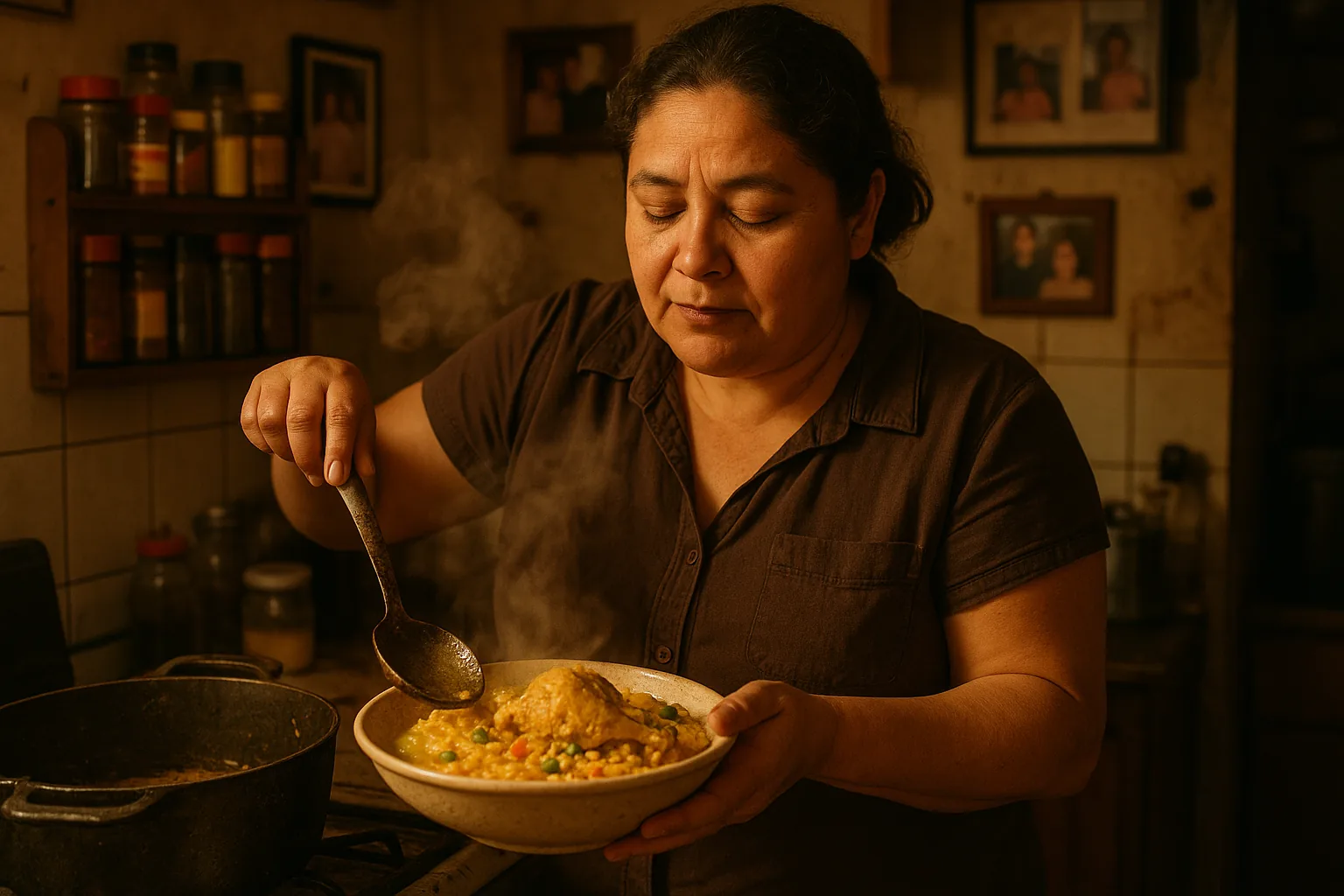
The steam off a cazuela of arroz con pollo hits different when someone you love made it and is watching you eat. That first spoonful carries the weight of a kitchen you grew up in, a hand that stirred without measuring, a plate loaded past the rim because that’s how you know you matter.
Latino portion size isn’t a line item on a nutrition label. It’s a language. And like any language, it shapes what you think, what you feel, and what you believe is normal. The trouble starts when what looks normal on a plate no longer matches what your body actually needs, whether you’re managing your weight on your own or navigating the strange new appetite reality of GLP-1 receptor agonists like semaglutide and tirzepatide.
This is a story about plates, stomachs, culture, and the growing gap between them.
How Latino Families Teach Hunger Through the Plate
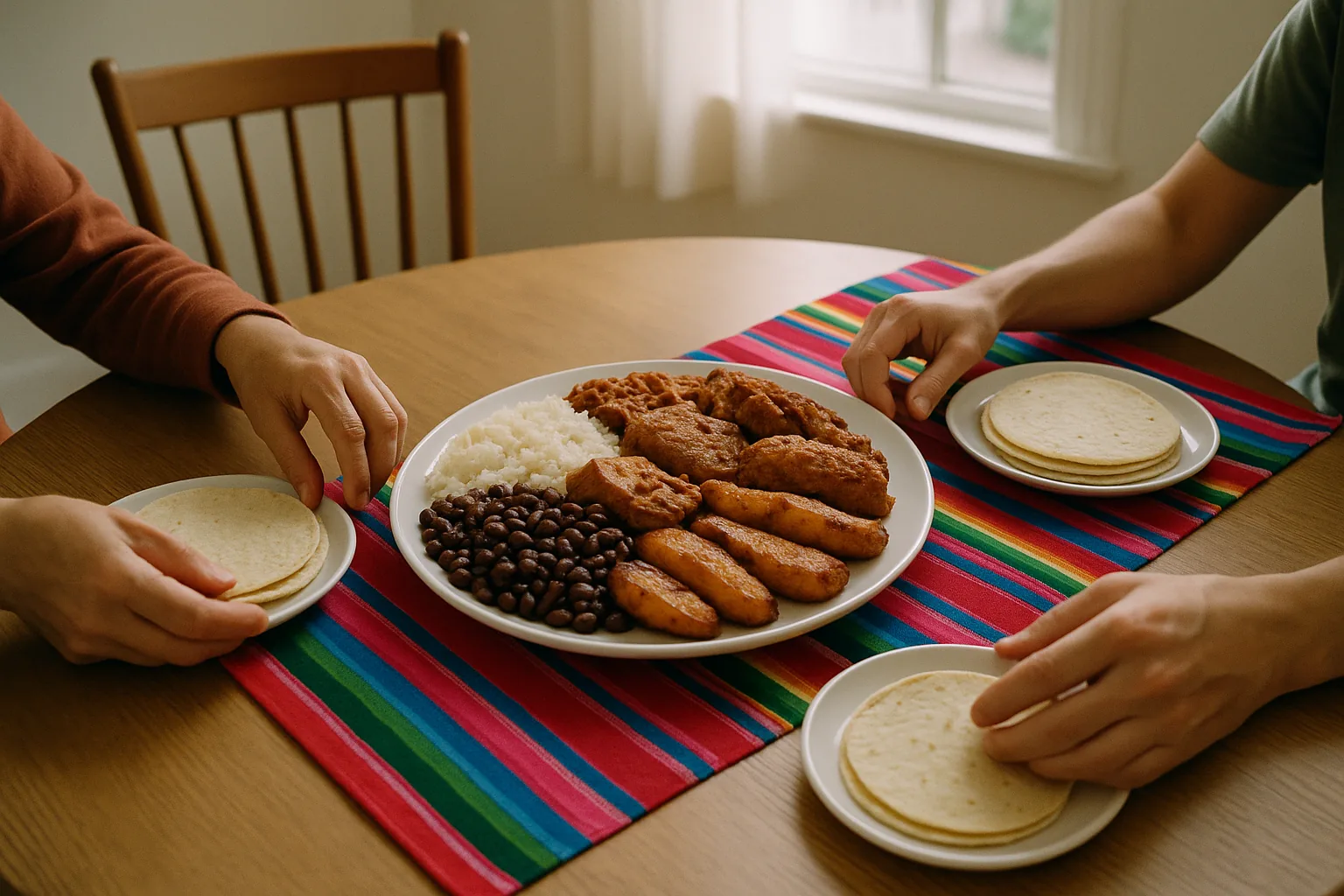
Before you ever learn the word “calorie,” you learn what a meal is supposed to look like. In many Latino households, that lesson comes from the serving itself. Rice touching beans touching a protein, maybe a side of maduros, maybe a stack of tortillas wrapped in a cloth. The plate is full. Often, it’s overfull. And that abundance isn’t accidental.
Researchers at the University of California, San Francisco, conducted qualitative interviews with Latina mothers about how they decide portion sizes for their children. What they found went way beyond nutrition. Mothers described portioning as tangled up in tradition, family expectations, and a deep desire to provide. Many of them admitted they weren’t sure what a “correct” portion actually was, because their reference point wasn’t a dietary guideline. It was what their own mothers served them. What their tías put on the table at Sunday gatherings. What felt right.
That phrase, “felt right,” is doing a lot of work. Because the science on portion size shows something uncomfortable: what feels right is largely a product of what you’ve been exposed to. In a landmark review published in *Physiology & Behavior*, researchers found that larger portions reliably increase energy intake across nearly every study design tested. People eat more when they’re served more. Not because they’re hungrier, but because the portion itself resets their expectation of what a normal amount looks like. The technical term is the “portion size effect,” and it operates below conscious awareness. You don’t decide to overeat. You just finish what’s in front of you.
Now layer that onto a cultural context where the plate is already generous by design. Where leaving food behind can feel like rejecting the person who made it. Where a clean plate signals satisfaction and a half-eaten one raises eyebrows. You get a feedback loop: big portions become the baseline, the baseline becomes the expectation, and the expectation starts to feel like hunger.
Segunda Ayuda and the Social Cost of Saying No
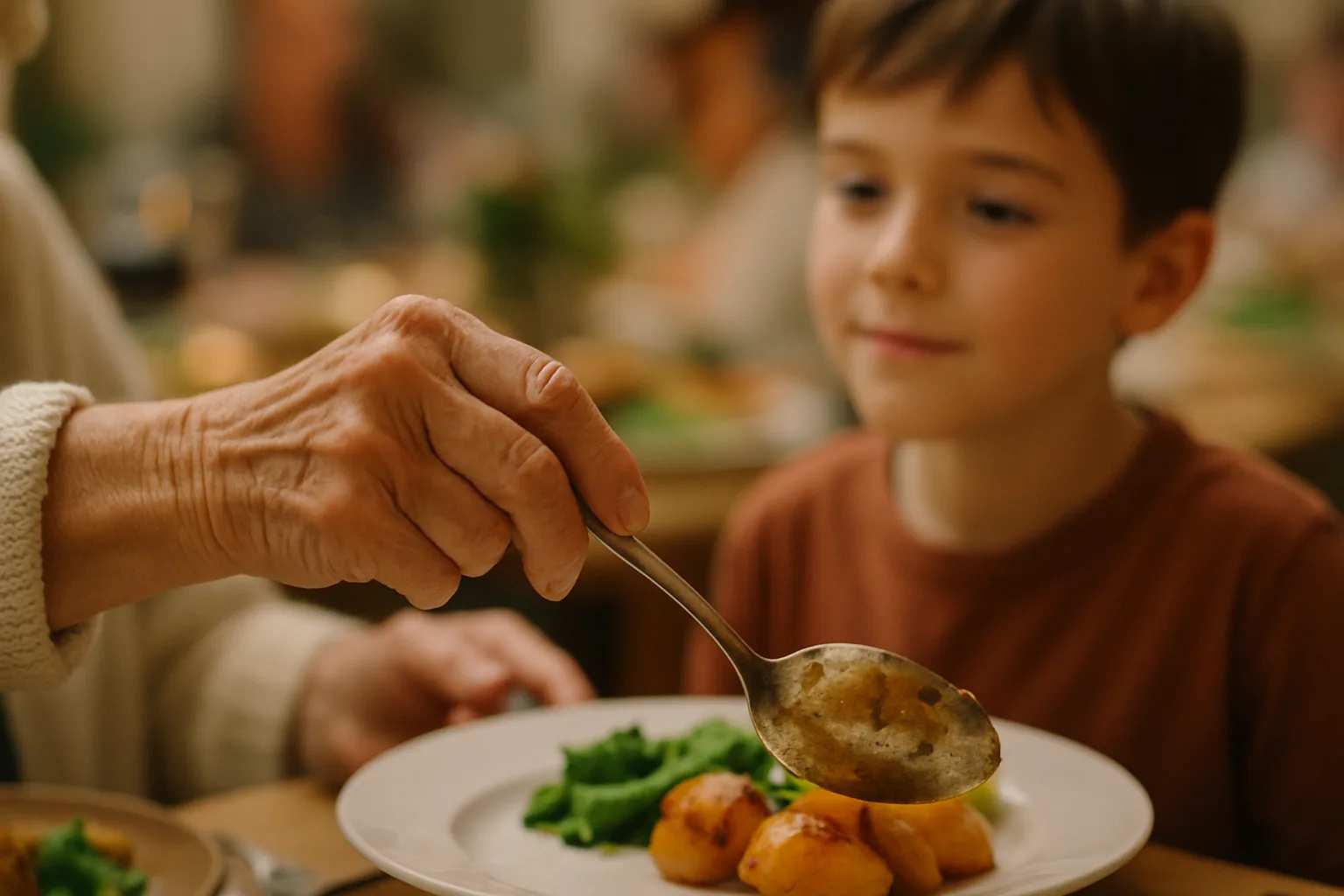
There’s a moment at every family meal that anyone who grew up Latino recognizes. The food is served. You eat. And then someone, usually a grandmother or an aunt, reaches for your plate and asks if you want more. Or doesn’t ask. Just serves it.
Segunda ayuda, the second helping, is one of the most loaded gestures in Latino food culture. It communicates that the cook succeeded. That the food was good enough to warrant another round. That the host has enough to share, an especially significant signal in families with histories of food insecurity or migration. Refusing can feel awkward, even rude. Accepting is the path of least resistance, and it often comes with a warm smile and another ladle of caldo.
The research literature doesn’t have a dedicated body of work on segunda ayuda by name. But it fits neatly into a broader evidence base on how social norms drive intake. A 2014 study in *Appetite* demonstrated that people adjust how much they eat based on what they believe others are eating or expect them to eat. When a social norm signals “eat more,” people eat more. When family-style serving keeps food visible and accessible on the table, intake goes up further, because the cue to stop eating has to come entirely from inside the person rather than from an external signal like an empty plate or a removed dish.
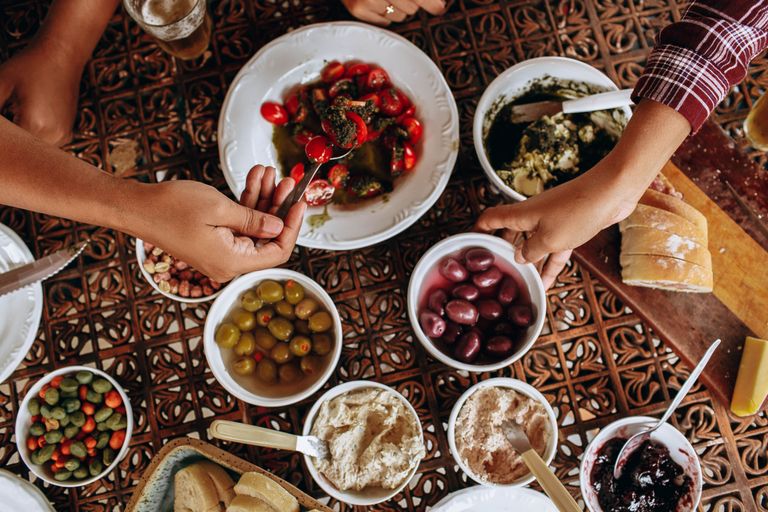
For families where food is served from a communal pot at the center of the table, this is the default setting. The rice stays out. The beans stay out. The tortillas are right there. Every few minutes, your eyes land on them, and each glance is a micro-decision: more or not? Research on food visibility and proximity, much of it from Brian Wansink’s lab at Cornell (flawed in other ways, but replicated on this specific point by independent groups), consistently shows that keeping food within arm’s reach increases consumption by 20 to 30 percent compared to moving it even a few feet away.
None of this means the tradition is wrong. It means the tradition was designed for a different metabolic era, one where physical labor was harder, food was less calorically dense, and overshoot was less consequential. The tradition still carries meaning. But the metabolic math has changed.
Oversized Restaurant Plates and the Norm Shift
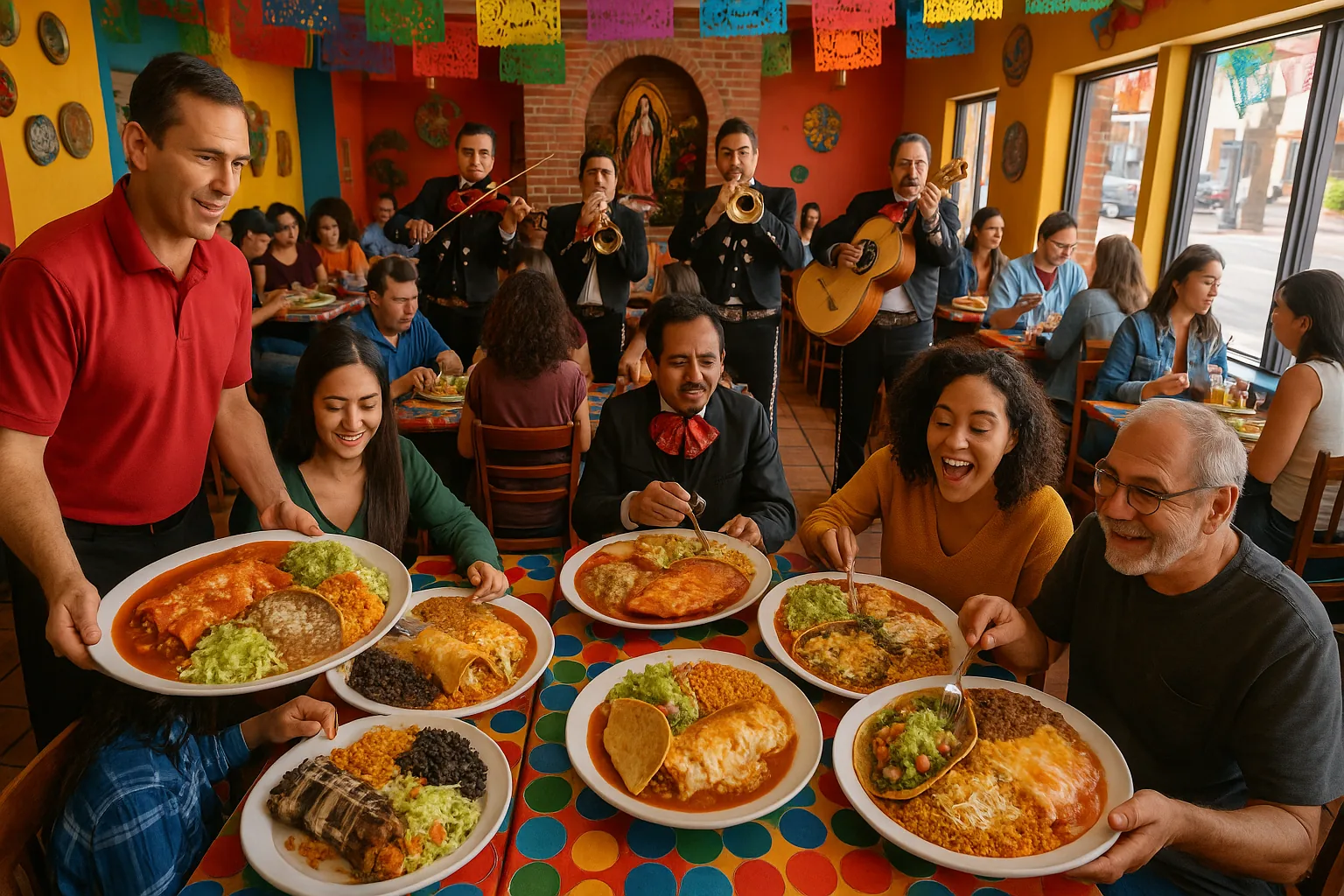
Step outside the home kitchen and into any Mexican, Salvadoran, or Cuban restaurant in the U.S., and the portion issue amplifies. Restaurant portions in the United States have grown dramatically over the past four decades. According to data from the National Heart, Lung, and Blood Institute, the average restaurant plate in the U.S. grew from about 10 inches in diameter during the 1960s to 12 inches or more today. That doesn’t sound like much until you do the area calculation: a 12-inch plate has 44 percent more surface area than a 10-inch plate. More surface area means more food fits without looking excessive. A portion that would’ve looked enormous on a 1970s plate looks normal on a modern one.
For Latino families eating out, this compounds the cultural baseline. If your home plate is already generous and the restaurant plate is even more so, your mental model of a “regular meal” drifts further from what nutritional guidelines recommend. A cross-cultural study on plate size and perceived fullness, published in the *International Journal of Obesity*, found that fullness estimates are not purely biological. They’re learned through repeated dining experiences and vary significantly by culture. People who routinely eat from large plates calibrate their satiety expectations upward. They need to see more food to feel like they’ve had enough.
This is not about willpower. This is about the brain’s visual-satiety system being trained, meal after meal, year after year, to associate a certain visual volume of food with the feeling of “done.” When the training set is consistently oversized, the threshold for satisfaction climbs with it.
GLP-1 Medications Create a Cultural Collision
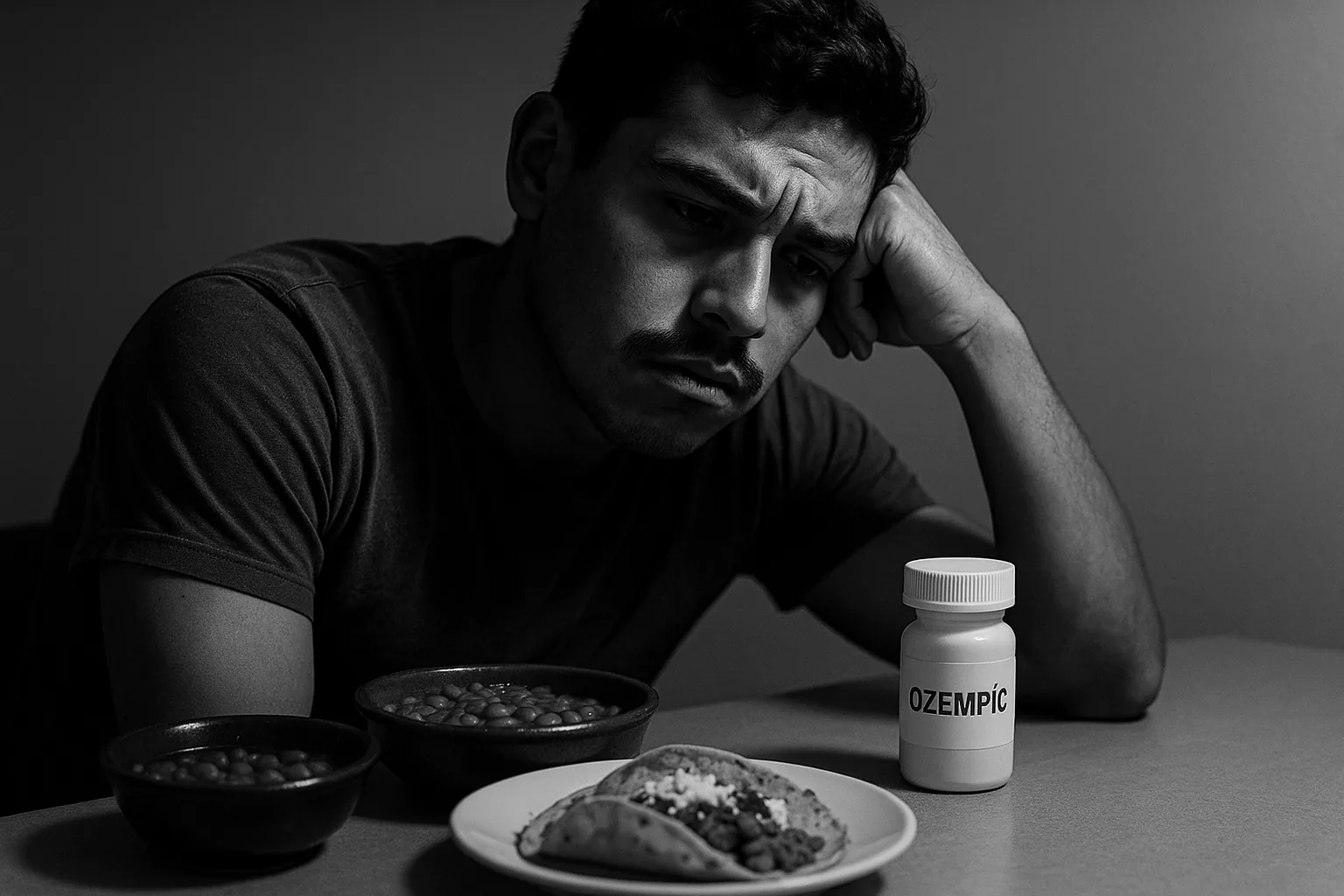
Here’s where it gets really interesting, and really complicated. Enter semaglutide (sold as Ozempic and Wegovy) and tirzepatide (Mounjaro and Zepbound). These GLP-1 receptor agonists work by mimicking a gut hormone called glucagon-like peptide-1, which slows gastric emptying, reduces appetite signaling in the hypothalamus, and in the case of tirzepatide also activates the GIP receptor. The result is dramatic: people on therapeutic doses (2.4 mg weekly for semaglutide, up to 15 mg weekly for tirzepatide) report feeling full much faster, losing interest in food between meals, and in some cases experiencing mild aversion to foods they previously craved.
Clinical trials show average weight loss of about 15 percent of body weight with semaglutide and up to 22.5 percent with tirzepatide over 72 weeks. These are serious medications with real physiological effects on appetite circuitry. And they are increasingly prescribed in Latino communities, where rates of type 2 diabetes and obesity are disproportionately high. According to the CDC, Hispanic adults are 1.7 times more likely to be diagnosed with diabetes than non-Hispanic white adults, which means GLP-1 prescriptions in this population are rising fast.
Now imagine this: you’re at your mother’s house. She’s made a full spread. Enchiladas, frijoles, arroz, a salsa she ground by hand. She puts a plate in front of you that looks exactly like the plate she’s been making your entire life. But you’re six weeks into a semaglutide prescription, and after four bites, you’re full. Not “I should stop” full. Physiologically, unmistakably full. Your stomach has slowed to a crawl. Your brain is not interested.
The plate is still 80 percent full. Your mother is watching.
This is the collision. The medication is doing exactly what it’s designed to do: restoring sensitivity to satiety signals that had been blunted by years of metabolic dysfunction. But the plate was designed by love, by tradition, by a cultural logic that equates abundance with care. And the two systems are now in direct conflict.
Why “Just Eat Less” Doesn’t Work as Advice
The standard nutrition advice for managing portion size is simple in theory: use a smaller plate, measure your food, stop eating when you’re 80 percent full. The plate method, recommended by the American Diabetes Association, divides a 9-inch plate into sections: half for non-starchy vegetables, a quarter for lean protein, a quarter for carbohydrates. It’s evidence-based. It works in clinical settings.
But a qualitative study with Latinas managing eating disorders found that food is so tightly bound to emotion, immigration experience, and cultural identity that generic portion advice often falls flat. The researchers, publishing in the *Journal of Latina/o Psychology*, specifically recommended the plate method as a concrete visual tool, but only when it was framed within cultural context rather than as a replacement for traditional eating. The distinction matters. Telling someone to eat less of their mother’s cooking is not the same as helping them understand how to build a plate that honors tradition and serves their current body.
There’s also the issue of dietary assessment itself. A review of nutritional assessment methods across minority ethnic groups found that standard tools often fail to capture how traditional foods are prepared and served. When a study asks about “one serving of rice,” what does that mean? In a non-Latino context, it might be half a cup, measured dry. In a Dominican household, it might be a mound that covers half the plate. In a research context, this discrepancy muddies the data. In a real-life context, it means the person trying to follow portion guidelines doesn’t have a reliable mental image of what they’re supposed to be aiming for.
Rethinking the Plate Without Rejecting the Table
So what does intelligent portion management look like when culture and pharmacology are both in the room?
First, it helps to separate the food from the gesture. The segunda ayuda isn’t really about the second helping. It’s about connection. It’s the host saying, “I see you, I care about you, you belong here.” Finding other ways to express that, like lingering at the table longer, asking for the recipe, complimenting specific flavors, can absorb the social function of the second plate without the caloric load. This isn’t a hack. It’s an honest reframing of what the tradition is actually about.
Second, the physical plate matters more than people think. Switching from a 12-inch plate to a 10-inch plate at home reduces intake by an estimated 22 percent, according to a meta-analysis published in the *Journal of the Association for Consumer Research* in 2016. You still fill the plate. It just holds less. For someone on a GLP-1 agonist who’s struggling with the visual disconnect between their reduced appetite and a traditional-sized serving, a smaller plate can bridge the gap. A full small plate feels more satisfying than a half-empty large one, even when the calorie content is identical. The brain cares about visual completeness.
Third, family-style serving can be modified without being eliminated. One practical change: plate the meal in the kitchen rather than putting serving dishes on the table. Research from the Cornell Food and Brand Lab (replicated by a group at the University of Cambridge) found that serving food from the stove rather than the table reduced total intake by roughly 20 percent, simply because the friction of getting up for more was enough to make people pause and check in with their hunger. The food is still there. The tradition of abundance is preserved. But the default shifts from automatic seconds to intentional seconds.
Fourth, for those on GLP-1 medications specifically, it’s worth having a direct conversation with family about what the medication does. Not in clinical terms, but in plain language: “This medication changes how fast I feel full. I might eat less than I used to. It doesn’t mean I don’t love the food.” That conversation can prevent the misreading that so often happens, where a reduced appetite is interpreted as rejection, ingratitude, or even illness.
The Dose, the Limits, and What We Don’t Know
A few caveats are worth naming. The portion size effect, while robust, has been studied predominantly in controlled laboratory settings and predominantly in non-Latino populations. The magnitude of the effect in real-world Latino family meals, where social and emotional variables are layered thick, may be different. We’re extrapolating from strong but imperfect data.
GLP-1 receptor agonists carry their own risks. Common side effects include nausea (reported in 20 to 44 percent of participants in semaglutide trials), vomiting, diarrhea, and constipation. More serious but rare risks include pancreatitis, gallbladder disease, and a potential (still debated) association with thyroid C-cell tumors, based on animal data with semaglutide. These medications are not cosmetic tools. They are indicated for people with a BMI of 30 or greater, or 27 or greater with at least one weight-related comorbidity.
The cultural research is also limited. Most studies on Latino food practices are qualitative, conducted with small samples, and focused on Mexican-American populations. The dietary traditions of Caribbean Latino families, Central American families, and South American families differ substantially. Assuming a monolithic “Latino portion culture” would be its own form of oversimplification.
One Recommendation Worth Trying Tonight
Here’s the most practical thing you can do this week: serve dinner on a 9- or 10-inch plate, portioned in the kitchen, with the serving pot left on the stove. Eat slowly. If someone asks for seconds, let them get up and serve themselves. Notice how the meal feels different. Not worse. Just different. The food is the same. The love is the same. The plate is just a little more honest about what your body actually needs.
That’s not a rejection of tradition. It’s tradition catching up to the body you live in now.