The Folding Chair Does More Than the Treadmill
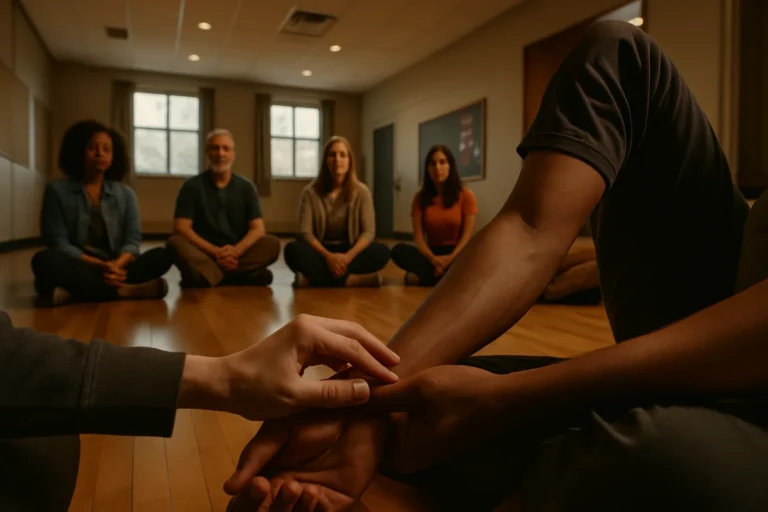
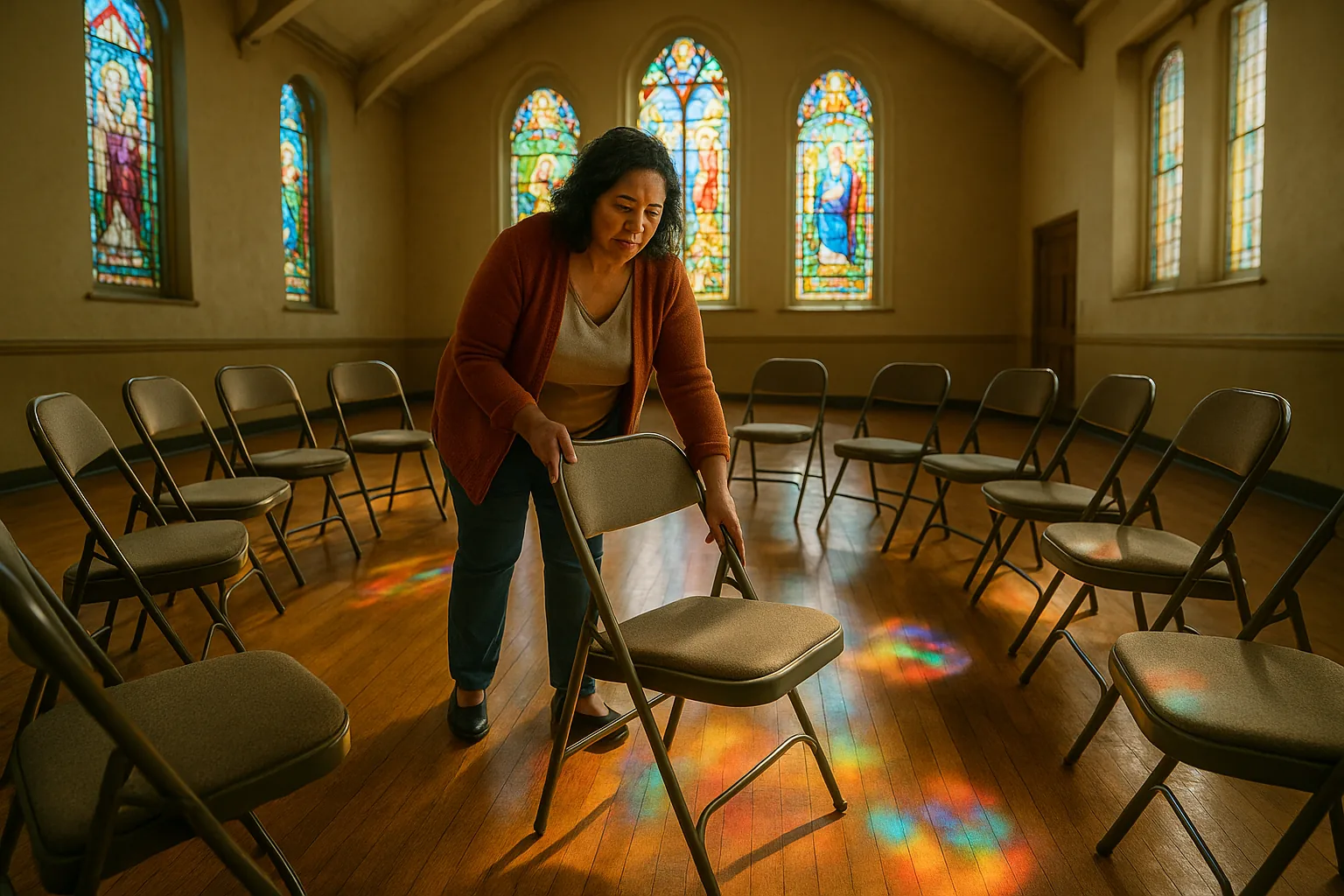
Carmen Reyes is standing in a fluorescent-lit parish hall in Camden, New Jersey, arranging folding chairs into a circle. It’s a Tuesday. The circle is for a workshop called *Recupera Su Felicidad* — Recover Your Happiness — and Carmen, who runs the front desk at a Catholic Social Services center called Casa Del Carmen, is expecting about fifteen people. Most of them are women over fifty. Most of them would not describe what they’re about to do as mental-health care. They’d call it the Tuesday group. They’d say they come for the people.
That distinction — between what a program technically is and what it feels like to the person sitting in the folding chair — turns out to be the most important variable in whether Latino adults ever access mental-health support at all. Not the clinical model. Not the exercise intensity. Not the credentials on the wall. Latino mental health access hinges on a question that’s simpler and harder: does this feel like a place I belong?
Why It Starts With Trust

There’s a number that floats through the research literature like a warning. Depending on the study, somewhere between 50% and 85% of Latino adults with a diagnosable mental-health condition don’t receive treatment. The reasons are layered — insurance gaps, language barriers, provider shortages — but one factor keeps surfacing in qualitative research with a persistence that’s hard to ignore: stigma. Not generic stigma. Specific, culturally shaped stigma that interacts with faith, family structure, and ideas about what it means to be strong.
A 2020 review of religious coping and mental-health stigma among Latinos found that mental illness is sometimes interpreted through frameworks that include weak faith, insufficient prayer, demonic influence, or family sin. These aren’t fringe beliefs. They’re embedded in congregational narratives, passed across generations, and reinforced in certain church settings. The same review noted that these interpretations can intensify delay and shame. They make formal treatment feel not just unfamiliar but morally fraught.
That’s what makes churches so interesting as access points. Not because they solve the clinical problem directly. Because they occupy the one institutional space where trust already exists.
A multilevel parish trial designed by researchers at institutions including the University of Southern California was built on exactly this premise. The investigators chose parish settings because Latino individuals may be reluctant to seek professional care but often rely on their congregations. The researchers’ phrasing — “trusted institutions” offering support “compatible with religious beliefs and values” — is academic, but the idea underneath it is plain: people will accept help from a place that already feels like theirs. The intervention wasn’t a therapy group. It was a combination of workshops, homilies incorporating mental-health literacy, text messages, and conversations with people the parishioners already knew — what the researchers called “trusted messengers.”
The approach was deliberately low-threshold. You didn’t have to say you had depression. You didn’t have to accept a clinical label. You just had to show up for something that was already part of your week.
Project AMEN and What 71% Participation Reveals
The trial eventually became known as Project AMEN, and its process evaluation offers some of the most granular evidence available on what makes parish-based mental-health programming stick for Latino populations. Seventy-one percent of participants engaged in at least one activity. That’s a high number for any intervention run outside a clinic, but what’s more telling is the pattern underneath it.
Participation, satisfaction, and reach were all higher among people with stronger existing connections to their parish. People who already knew others in the congregation, who attended mass regularly, who felt socially integrated — they showed up more and reported getting more out of it. On the flip side, individuals who had mental-health problems reported more barriers to participation, not fewer. The people who arguably needed the intervention most were the ones who found it hardest to access, even when it was free, nearby, and embedded in a space they already occupied.
This is a critical finding because it cuts against a simplistic narrative. You can’t just put a program inside a church and assume it reaches everyone. The mechanism isn’t the building. It’s the social fabric inside the building. Belonging predicts participation. Connection is the infrastructure.
And here’s where it gets more interesting: the number of program activities attended predicted reductions in several forms of mental-health stigma. Not the content of any single activity. Not whether participants learned a specific coping skill. The dose variable was attendance itself — showing up, sitting in the circle, hearing language about mental health in a context that didn’t feel clinical. Repeated exposure in a trusted environment appeared to do something that a brochure or a one-time screening could not.
Stigma as Gatekeeper
To understand why any of this matters, you have to understand how stigma functions — not as a single wall but as a series of gates, each with its own lock. Here’s what actually stops people from walking through the door.
Personal stigma. The belief that experiencing depression, anxiety, or emotional distress reflects a personal failing. Research on Latino help-seeking consistently identifies this, especially among men and older adults. The phrase “echarle ganas” — roughly, to push through with willpower — captures a cultural expectation that effort should be sufficient. Asking for help can feel like an admission that your ganas weren’t enough.
Familial stigma. The concern that acknowledging mental-health problems will bring shame to the family or expose private matters to outsiders. Several qualitative studies have found that Latino participants describe mental health as something you handle *dentro de la familia* — within the family. Seeking outside help can feel like a betrayal of family loyalty, not a step toward something better.
Religious stigma. The interpretation of mental illness through spiritual frameworks. This isn’t uniform — many Latino clergy are deeply supportive of mental-health care. But the belief systems documented in the literature create real friction. Depression might reflect weak faith. Anxiety could be a spiritual test. Medication might interfere with God’s plan. A standard referral pathway doesn’t address any of that, because it wasn’t built to.
What parish-based programs do, when they work, is operate behind all three gates simultaneously. You’re not “seeking help.” You’re attending a parish event. You’re not exposing family problems. You’re participating in something communal. You’re not contradicting your faith. The program was designed in consultation with clergy and framed in language that acknowledges spiritual life.
This is not a small distinction. It’s the whole game.
How Clinics Are Extending the Bridge
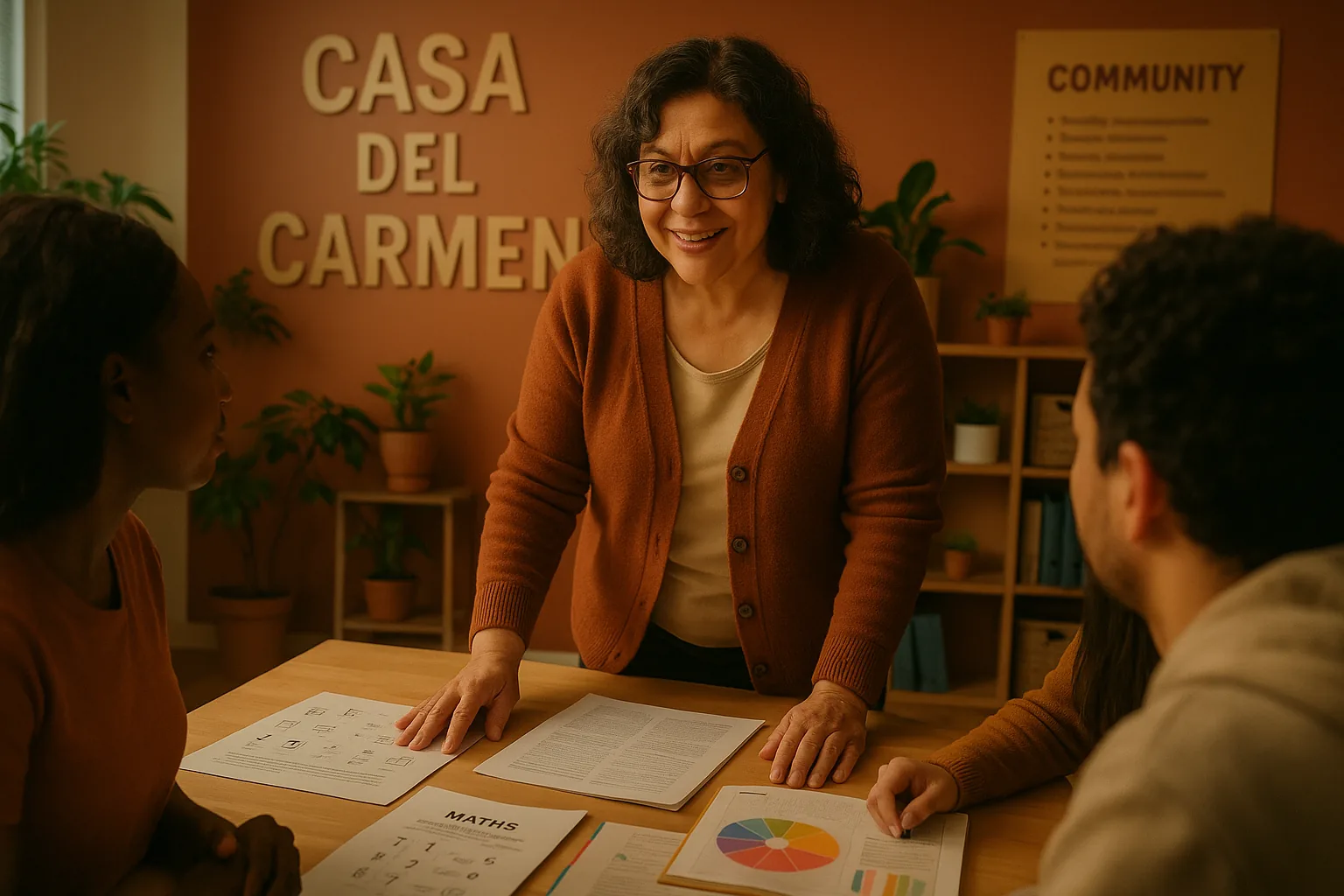
Carmen Reyes’s program in Camden illustrates a model that’s becoming more common: the clinic that uses parish partnerships to extend its reach. Casa Del Carmen is part of Catholic Social Services, and *Recupera Su Felicidad* was designed to improve access through information, referral, and workshops held both at the center and at nearby parishes. The idea is to meet people in the spaces they already trust and then, when appropriate, build a bridge to more formal services.
This bridging function matters because parish-based programs have a ceiling. Trusted messengers can normalize conversations about anxiety and depression. Workshops can teach basic mental-health literacy. Homilies can reduce the spiritual stigma that keeps people from acknowledging distress. But a parish hall can’t prescribe sertraline. It can’t conduct a structured diagnostic interview. It can’t provide trauma-focused therapy for someone whose symptoms are severe.
The question, then, is whether these congregation-anchored programs can serve as the first step in a pathway that eventually includes clinical care for those who need it — without losing the trust that made the first step possible.
Some of the evidence suggests they can. Faith-based mental-health literacy programs have been developed precisely because standard care often doesn’t address religious beliefs, and churches function as major sources of health information, support, and referral for Latino families. When a priest mentions depression from the pulpit without pathologizing it, when a promotora at a neighborhood clinic uses language that acknowledges both science and faith, the distance between “my parish group” and “my doctor’s appointment” gets shorter.
But this requires coordination that’s often underfunded and fragile. Promotoras de salud — community health workers — are frequently the connective tissue, and their labor is chronically undercompensated. Parish leaders volunteer their time and space. When a grant cycle ends, the Tuesday circle can disappear.
Why Workout Intensity Isn’t the Variable That Matters
Here’s a thing that might frustrate people who think about public health in terms of dose and intensity: in these programs, the activity itself is often secondary. Some parish and senior-center programs include movement — chair yoga, walking groups, gentle stretching. Some don’t include any physical activity at all. When movement is included, it’s typically low-intensity and designed for accessibility, not for cardiovascular adaptation.
And yet participants report feeling better. They report lower levels of distress. They show up week after week.
The research on exercise and mental health is robust. Regular physical activity reduces symptoms of depression and anxiety through mechanisms that include increased brain-derived neurotrophic factor (BDNF), modulation of the hypothalamic-pituitary-adrenal (HPA) axis, reduced systemic inflammation, and increased availability of serotonin and norepinephrine. A meta-analysis published in the British Journal of Sports Medicine in 2023 found that exercise interventions produced effects on depression that were 1.5 times larger than either psychotherapy or pharmacotherapy alone.
But those findings typically come from structured exercise programs with defined frequencies and intensities — three to five sessions per week, moderate to vigorous effort, sustained for at least eight weeks. The chair circle at a parish hall doesn’t look like that. And the senior-center walking group that meets once a week for thirty minutes at a conversational pace doesn’t either.
So what’s happening? A few possibilities.
First, social participation itself has measurable neurobiological effects. Loneliness and social isolation are associated with elevated cortisol, increased inflammatory markers like C-reactive protein and interleukin-6, and heightened activity in the brain’s threat-detection systems. Reversing isolation — even through low-intensity social contact — can partially normalize these pathways. The folding chair might be doing pharmacology that the treadmill doesn’t.
Second, meaning matters. Research on Latino older adults has found that activities perceived as communal and purposeful generate stronger adherence than activities framed as individual health behaviors. A walking group organized by a church “for our neighborhood’s well-being” hits different than a doctor saying “you should walk more.” The framing changes the motivation, which changes the consistency, which changes the outcome.
Third, there’s the stigma-reduction effect documented in Project AMEN. Every session attended reduced mental-health stigma incrementally. If the barrier to formal care is stigma, and the program reduces stigma through repeated attendance, then the program’s primary mechanism isn’t exercise. It’s exposure — to language, to norms, to the idea that talking about how you feel doesn’t make you weak or faithless.
What the Senior Center Adds That the Clinic Can’t
Senior centers deserve separate attention because they serve a population at particularly high risk and with particularly low access. Latino adults over sixty-five have among the lowest rates of mental-health service utilization of any demographic group in the United States. Language barriers are more pronounced in this cohort. Medicare navigation is more confusing. Transportation is harder. And the generational stigma around mental health is often deeper.
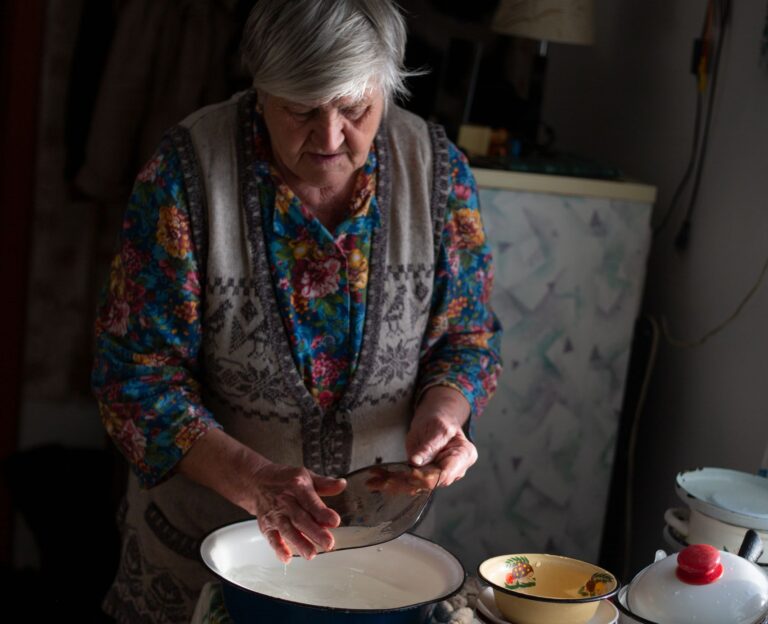
But many of these same adults are already going somewhere once or twice a week. They’re going to the senior center. They play dominoes. They eat lunch. They sit with people who speak their language and remember their country.
The value of this is hard to capture in a randomized controlled trial, but the qualitative evidence is consistent. In studies of Latino older adults, participants describe the senior center as a place where they feel seen, where loneliness retreats, where they have a role. One recurrent theme is the concept of *acompañamiento* — accompaniment — the idea that being present with someone is itself a form of care. Not fixing. Not diagnosing. Just being there.
Some senior centers have begun layering mental-health programming into their existing structures. A social worker visits on Thursdays. A promotora leads a monthly *charla* — an informal talk — about stress, sleep, or grief. The programming is woven into what already exists rather than imposed from outside.
This is low-cost. It’s culturally congruent. And it addresses what the research keeps pointing to: that for many Latino adults, the first barrier to mental-health support isn’t the lack of a therapist. It’s the absence of a doorway that feels safe to walk through.
The Limits of the Evidence and What We Still Don’t Know
Ask Carmen whether the Tuesday group actually reduces depression scores and she’ll give you a look. “I don’t know about scores,” she says. “I know Doña Luz stopped crying every morning. I know Mr. Ramos comes early now to set up the chairs.” That gap — between what the people in the room can see and what a study can prove — is the honest center of this section.
The evidence base for parish- and congregation-based mental-health programming in Latino populations is growing, but it’s still thin compared to the evidence for pharmacotherapy or cognitive-behavioral therapy. Most of the studies are small. Many are qualitative. The few randomized trials, like Project AMEN, are promising but limited in scale and follow-up duration.
We don’t know, with confidence, how durable the effects are. Does stigma reduction persist after the program ends? Does it translate to actual utilization of clinical services when they’re needed? Does the trust built in a parish hall extend to a therapist’s office six months later?
We also don’t know much about variation. Latino populations aren’t monolithic. A Catholic parish program in a predominantly Mexican-American neighborhood in Los Angeles may not work the same way in a Pentecostal church serving Central American immigrants in Houston. Dominican families in New York have different religious and social structures than Cuban families in Miami. The research hasn’t caught up to this diversity yet.
And there’s a risk of romanticizing these approaches in a way that lets systems off the hook. The parish hall works as a mental-health access point partly because the formal system has failed so profoundly that people need a workaround. We should say that plainly. The shortage of Spanish-speaking therapists in the United States is severe. Insurance coverage for mental-health services remains inadequate. The structural problems are real, and a folding-chair circle, no matter how beautiful, is not a substitute for systemic investment.
How to Use This Intelligently
If you’re a parish leader, a promotora, or someone working in a neighborhood clinic, the research suggests a few things worth taking seriously.
The most effective programs don’t start by talking about mental health. They start by talking about what people already care about — family, faith, stress, sleep, aging well — and they let the mental-health conversation emerge from there. The framing matters enormously. “Wellness workshop” lands differently than “depression screening.” Both might be doing similar work, but only one gets people through the door.
Trusted messengers are more important than expert credentials in this context. A parish deacon who’s known the congregation for twenty years may generate more engagement than a licensed clinical social worker visiting for the first time. That doesn’t mean clinical expertise is irrelevant. It means the introduction has to come through relationships, not referrals.
Consistency beats intensity. A modest program that runs every week for a year will likely outperform an ambitious program that runs for eight weeks and disappears. The Project AMEN data suggest that repeated attendance drives stigma reduction. You can’t get repeated attendance without sustained presence.
And physical movement, when included, should be framed as communal and accessible. Not a workout. Not a prescription. An invitation to move together. The dose doesn’t have to be clinically optimal. It has to be culturally welcome.
One concrete recommendation: if your parish or neighborhood center is considering starting something, look at the *Recupera Su Felicidad* model from Catholic Social Services’ Casa Del Carmen program. It combines information, workshops, and referral pathways, uses both the center and nearby parishes as sites, and it was designed for a Latino population dealing with the specific barriers documented in the research. It’s not a perfect template, but it’s a real one, and it exists because someone decided the folding chairs were enough to start with.
Carmen Reyes will tell you the same thing. She’ll tell you that the fifteen people who show up on Tuesday aren’t there because someone prescribed it. They’re there because it’s Tuesday, and this is where they go on Tuesdays, and the people in the circle know their names. The clinical language can come later. The belonging comes first.